Told no further treatment is possible
You have received a peritoneal carcinomatosis diagnosis and a specialist in your country has recommended only systemic chemotherapy. You want to know whether a surgical approach is feasible.

Your case reviewed by Dr. Quenet and the multidisciplinary committee in 48 hours. The team has performed more than 3,000 HIPEC procedures. We coordinate the process from your first message to discharge.
You have received a peritoneal carcinomatosis diagnosis and a specialist in your country has recommended only systemic chemotherapy. You want to know whether a surgical approach is feasible.
You or your oncologist have read about HIPEC and want an independent assessment from a team that performs it at high volume, not occasionally.
Tumour burden, previous surgery or location make your case technically demanding. You need a team that handles these situations routinely.
Whether because of waiting times, the cost of private healthcare or access to specific techniques, you are actively evaluating Spain as a destination for your surgery.
You have already received chemotherapy or prior surgery and your disease has progressed. You want to explore whether cytoreduction and HIPEC are still viable options.
Pseudomyxoma peritonei, peritoneal mesothelioma and appendiceal tumours are rare, and should be treated by a team with experience in them.
Complete cytoreductive surgery (CC-0/CC-1) for peritoneal carcinomatosis, with remote PCI assessment beforehand.
Liver resections and two-stage strategies for metastases of colorectal and other primary origins.
Robotic approach to rectal and colon cancer, with less surgical trauma and faster recovery.
Peritoneal carcinomatosis is no longer a uniformly terminal diagnosis. In correctly selected patients, cytoreductive surgery (CRS) combined with HIPEC offers the possibility of long-term disease control or cure. That is why we assess each case in detail before proposing a plan.
We calculate the PCI from your imaging and surgical reports to determine resectability before you travel. Cases with high tumour burden receive a clear, detailed explanation of what surgery can and cannot achieve.
A CC-0 or CC-1 resection (no macroscopic residual disease) is the only cytoreduction associated with improved long-term outcomes. We do not proceed if complete cytoreduction cannot be achieved.
When indicated, we combine intraperitoneal HIPEC with systemic perioperative chemotherapy, following evidence-based protocols adapted to the primary tumour type.
Every international case is formally reviewed in our tumour board, integrating surgical oncology, medical oncology, radiology, and anaesthesia before a treatment plan is proposed.

Surgical oncologist, HIPEC specialist
View profileMore than 30 years of experience in high-complexity gastrointestinal and peritoneal cancer surgery. Led the PRODIGE 7 trial on HIPEC in colorectal carcinomatosis.
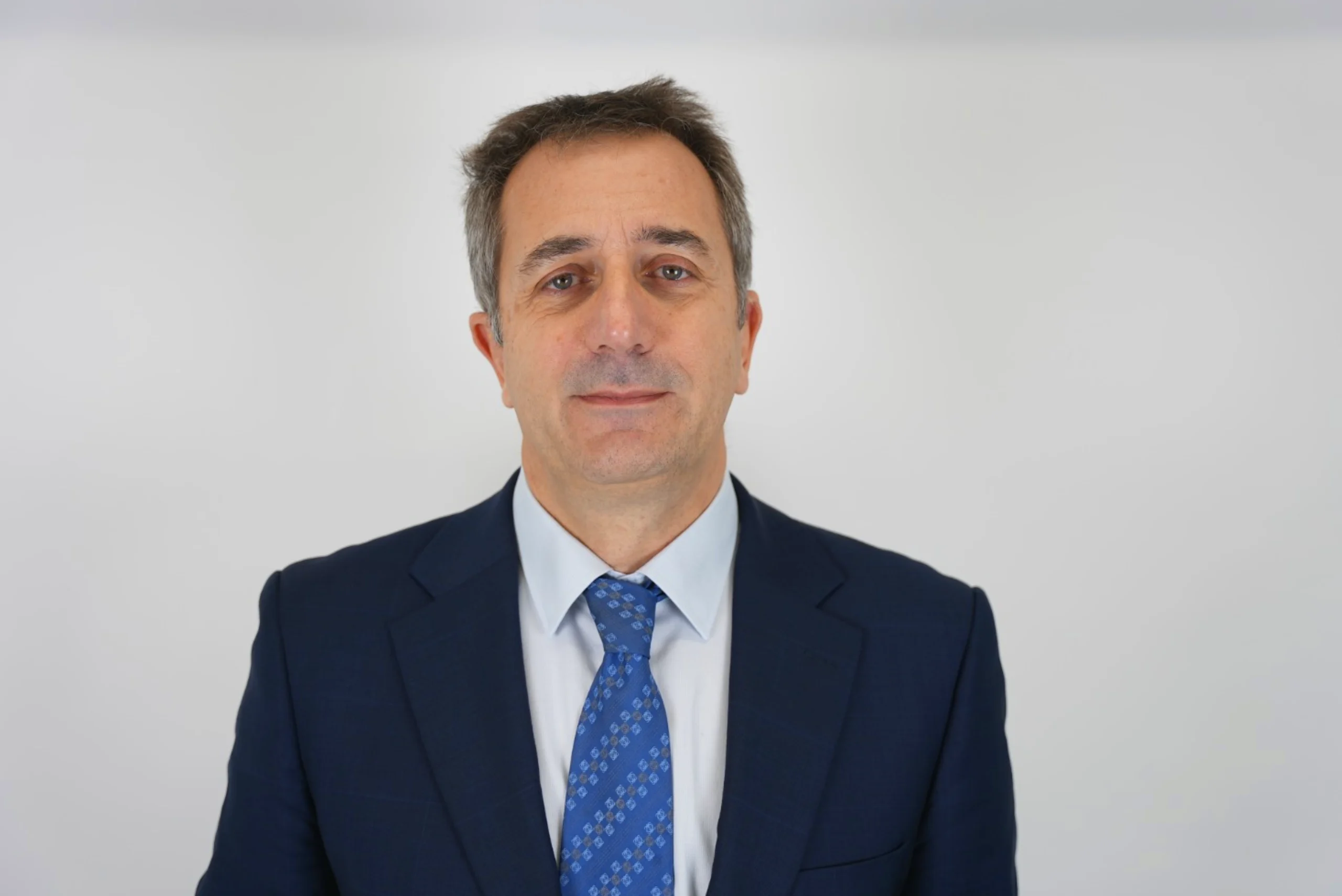
Surgical oncologist
View profileSpecialist in peritoneal surface oncology, hepatobiliary surgery and complex oncological resections. Extensive experience coordinating multidisciplinary care for patients coming from outside Spain.

Medical oncologist
View teamMedical oncologist specialising in gastrointestinal tumours and peritoneal disease. Responsible for perioperative systemic chemotherapy protocols and long-term oncological follow-up after surgery.
From your first message to the day you leave the hospital, we handle the complexity so you can focus on your health.
Share your medical reports, surgical reports, pathology results and imaging (CT, MRI, PET) through our encrypted system or by email. There is no need to travel at this stage.
Your case is formally presented to our tumour board, which includes the HIPEC surgeon, the medical oncologist and the radiologist. You receive a written summary with our assessment and a proposed plan.
You speak directly with the surgeon by video call. We explain the options, the risks and the expected recovery, and answer all your questions. Consultations are available in Spanish, English, French and Italian.
Once you decide to go ahead, our international patient coordinator handles the logistics: pre-operative tests that can be done in your country, flight dates, accommodation recommendations near the hospital and transfers.
Usually 1 to 3 weeks before the planned date of surgery, for the final pre-operative assessment. Your companion is welcome throughout the stay. Individual private suites available at both hospitals.
These are the reasons patients from Latin America, Europe, the Middle East and other regions come to us for surgery.
HIPEC is a demanding procedure with a steep learning curve. Outcomes correlate closely with the centre's volume. Our team has performed more than 3,000 procedures.
For a patient from Latin America, the whole process takes place in their own language: the case assessment, the video consultation with the surgeon and the travel coordination are all carried out in Spanish, with one named contact person.
For cases where surgery is indicated, we can typically schedule the procedure within 3 to 6 weeks of the decision to proceed, depending on pre-operative preparation needs.
Consultations available in Spanish, English, French and Italian. Our international patient coordinator supports you through every administrative step.
We operate at Centro Médico Teknon in Barcelona and at Hospital Memorial Publio Cordón in Madrid (25-30 km from Madrid-Barajas airport, with its own car park, robotic operating theatres and individual private suites, 4.9/5 from more than 51 Google reviews).
We do not promise what we cannot deliver. If your case is not suitable for HIPEC, we will tell you clearly and, if possible, suggest alternatives.
In the public health system they gave my father a year to live at most. They only gave him chemo treatment and no hope, they said it was impossible, that nothing could be done for him. He had several tumours inside the peritoneal sac with metastases. A year and a half later he is clear, completely cured. The last PET (imaging test) came back clear. We are very happy. Thanks to Dr. Torrent and his team. THANK YOU.
I have peritoneal carcinomatosis. When I sent my diagnosis to every centre, practically all of them agreed on palliative chemo with little survival time, because I had a very aggressive type of cells. Until we came to Dr. Quenet, Dr. Torrent and their team. I can only confirm what their CV says: they are far ahead of the rest. They saved my life, because during the operation the harmful cells that everyone had diagnosed, and for which nobody would operate on me, were not there. This operation has become the best investment of my life.
Wonderful surgical team, among the best there is. Dr. Torrent (expert in peritoneal carcinomatosis) is an exceptional surgeon and an even better person. His coordinator is super kind, quick and efficient. The personal care is great and so are the results. This is of vital importance for cancer patients.
I am a 63-year-old patient. They found adrenal gland cancer and told me there was nothing to be done. I looked for a second opinion and was told about the Quenet Torrent team, specialists in complex operations. From the very first moment, Dr. Torrent told me they could operate. They operated and removed a large tumour mass. I spent a week in the ICU and a month on the ward. Never throw in the towel. I am happy to have found these professionals who gave me my life back. Thank you.
The HIPEC programme is led by Dr. François Quenet and Dr. Juan José Torrent. The team also includes Dr. Clara Montagut in medical oncology, and Prof. Luis González Bayón and Prof. Fabrizio Panaro for complex cases. Every case goes through the full committee.
For international second opinions, we aim to reply within 48 working hours of receiving the complete documentation. You will receive a written summary of the committee's assessment and a direct contact from our international patient coordinator to discuss the next steps.
Yes. The international patient coordinator plans the pre-operative tests to reduce the number of trips. She also takes care of travel dates, accommodation near both hospitals and transfers. The aim is to keep the visits needed before surgery is scheduled to a minimum.
Spanish, English, French and Italian.
The cost depends on the complexity of the procedure, the length of the hospital stay and specific requirements. We give you a detailed written quote after the initial assessment, once your case has been reviewed and the surgical plan defined. The initial second opinion review is free of charge.
Most patients stay in hospital for 7 to 14 days after cytoreduction with HIPEC. The time depends on the extent of surgery and on individual recovery, and includes one or two days in a monitored unit. The return home is planned according to clinical progress, not a fixed calendar.
Yes. Both Teknon in Barcelona and Memorial Publio Cordón in Madrid offer individual private suites where a companion can stay with the patient. We particularly recommend that family members come with international patients, who are far from their support network.
The report and images of your most recent CT or PET-CT, and the pathology report with the tumour histology. Add the surgical reports from previous operations and the summary of your current cancer treatment. If you only have part of this, send what you have: we will tell you what is missing to give a reliable assessment.
Send your reports today. The team will review your case in 48 hours and give you a clear answer.
We operate in two private hospitals in Spain. The same medical team treats you in Madrid and in Barcelona, with the same surgical and oncological protocols.

Private hospital in Pozuelo de Alarcón with a multidisciplinary team specialised in digestive surgical oncology.
View Memorial Publio Cordón Hospital
Private hospital in Barcelona where the team performs high-complexity surgical oncology.
View Centro Médico Teknon
HIPEC is a treatment for peritoneal carcinomatosis. Learn about its side effects, how to prevent them and what to expect during recovery.

Prognosis in peritoneal carcinomatosis does not depend on a single figure. Tumour type, extent, cytoreductive surgery and the patient's condition determine the course of the disease.
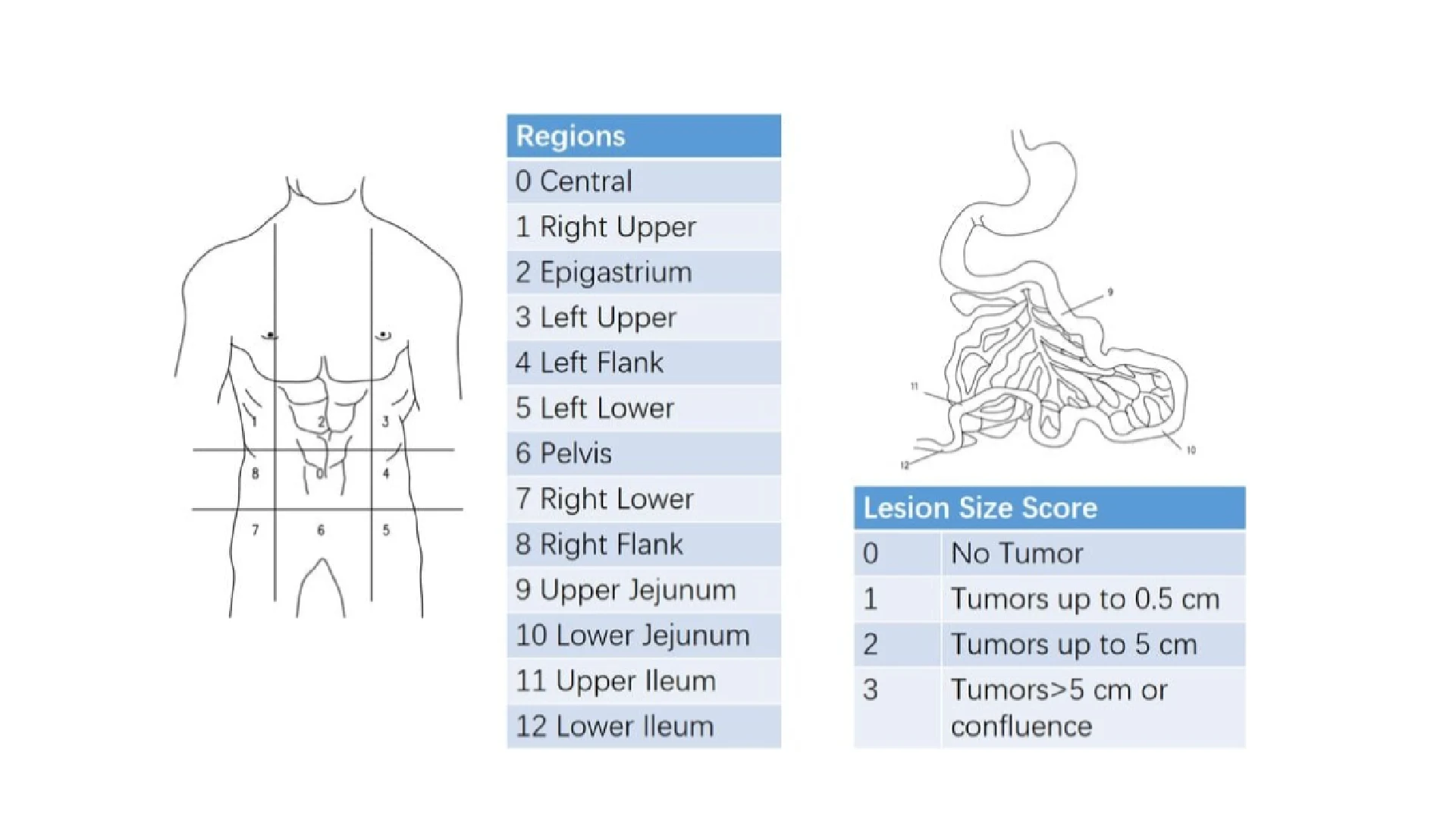
Clinical guide to the Peritoneal Cancer Index (PCI): what it measures, how it is calculated, how it is applied in treatment decisions and its relationship with cytoreductive surgery.
Complete the form and schedule your appointment to speak directly with the surgeon.