Confirm feasibility
Confirm whether the combination of cytoreductive surgery and HIPEC is a feasible alternative.

At Quenet-Torrent Institute we have a unit specialized in the surgical treatment of peritoneal carcinomatosis, an advanced form of tumor spread. We perform cytoreductive surgery, with or without HIPEC, with a multidisciplinary team.
CONTACT SPECIALISTPeritoneal carcinomatosis is treated with complete cytoreductive surgery (CRS) and HIPEC in selected patients. At Quenet-Torrent Institute (Centro Médico Teknon Barcelona · Hospital Memorial Publio Cordón Madrid), the team led by Dr. François Quenet (principal investigator of the PRODIGE-7 trial, The Lancet Oncology 2021) and Dr. Juan José Torrent has performed more than 3,000 CRS+HIPEC procedures.
What peritoneal carcinomatosis is, how it is treated and what surgery can offer in a specialized unit.
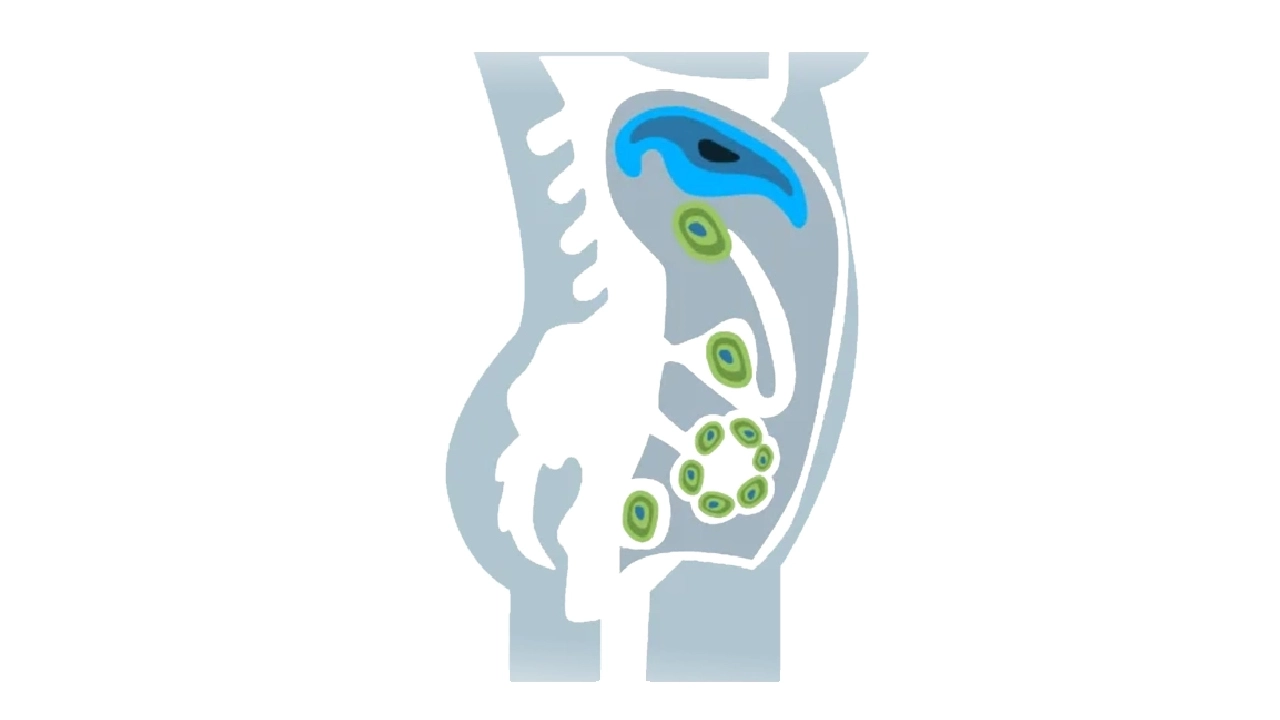
Peritoneal carcinomatosis occurs when tumor cells spread through the peritoneum, the membrane that lines the abdominal cavity and its organs. This spread can originate from different types of cancer, the most common being colorectal, gastric and ovarian cancer, peritoneal mesothelioma and appendiceal tumors such as pseudomyxoma peritonei.
It is an advanced condition, although not necessarily terminal. Today there are treatments with curative intent, especially when surgery is combined with HIPEC in cases of pseudomyxoma peritonei, peritoneal mesothelioma and ovarian cancer.
Peritoneal carcinomatosis can present with progressive abdominal swelling, fluid build-up in the abdomen (ascites), diffuse abdominal pain or discomfort, early satiety, loss of appetite and weight, and changes in bowel transit that in advanced cases can lead to partial or complete obstruction. Severe tiredness is also a common symptom in these patients.
In many cases, symptoms appear during follow-up of a digestive or gynecological cancer that was already diagnosed. When they occur together, or when a check-up detects signs of new spread, it is advisable to see a team specialized in peritoneal oncology soon to assess the treatment options.
Peritoneal carcinomatosis is caused by tumor cells spreading from a primary tumor to the peritoneum. The most common origins are digestive tumors (colon, rectum, stomach, appendix and pancreas), gynecological tumors (mainly ovarian cancer), primary peritoneal mesothelioma and pseudomyxoma peritonei of appendiceal origin.
The risk of developing peritoneal carcinomatosis depends largely on the characteristics of the original tumor: involvement of the serosa, tumor perforation during the course of the disease or during surgery, and an advanced stage at initial diagnosis are factors that increase the likelihood of peritoneal spread. Knowing these factors helps guide oncological follow-up and detect peritoneal involvement earlier.
Asking for a second medical opinion is not a sign of distrust, but a responsible attitude towards a complex diagnosis.
Confirm whether the combination of cytoreductive surgery and HIPEC is a feasible alternative.
Compare options when only palliative treatment has been proposed initially.
Assess the experience and results of the proposed center.
Check that the proposed treatment is in line with current evidence.
In conditions such as peritoneal carcinomatosis, time matters, but so does deciding with good information.
The most effective treatment for this condition is cytoreductive surgery, which aims to remove all visible macroscopic disease, sometimes followed by HIPEC, a perfusion of heated chemotherapy directly into the abdominal cavity.
It is performed in a single operation, under general anesthesia.
It allows localized chemotherapy to be applied at high temperature, which increases its effect on residual tumor cells without the usual systemic toxicity.
It is indicated only in selected patients, after assessment by an oncology board.
At Quenet-Torrent Institute each case is studied in detail to decide whether the treatment is feasible.
Dr. Juan José Torrent Correa explains how peritoneal carcinomatosis is treated with a multidisciplinary strategy that can combine systemic treatment, cytoreductive surgery and hyperthermic intraperitoneal chemotherapy.
The PRODIGE 7 trial, led by Dr. François Quénet and published in The Lancet Oncology, compared cytoreductive surgery alone with cytoreduction plus short-course oxaliplatin HIPEC in patients with peritoneal metastases of colorectal origin. With that specific protocol, HIPEC did not increase overall survival and was associated with a higher rate of late postoperative complications.
The relevant reading of the study is not that surgery no longer makes sense, but the opposite: both groups exceeded 40 months of median survival, far above what would be expected with systemic treatment alone. What supports that result is complete cytoreduction, that is, the real ability to remove all visible disease. The surgical technique and patient selection weigh more than adding the perfusion.
An international analysis published in BJS Open in 2024, of more than 2,000 patients, found variable results between different HIPEC regimens, but its retrospective nature prevents concluding that any one of them is superior. That is why at Quenet-Torrent Institute HIPEC is not applied automatically: it is indicated according to the origin of the tumor, the protocol available, previous treatments and the board's assessment.
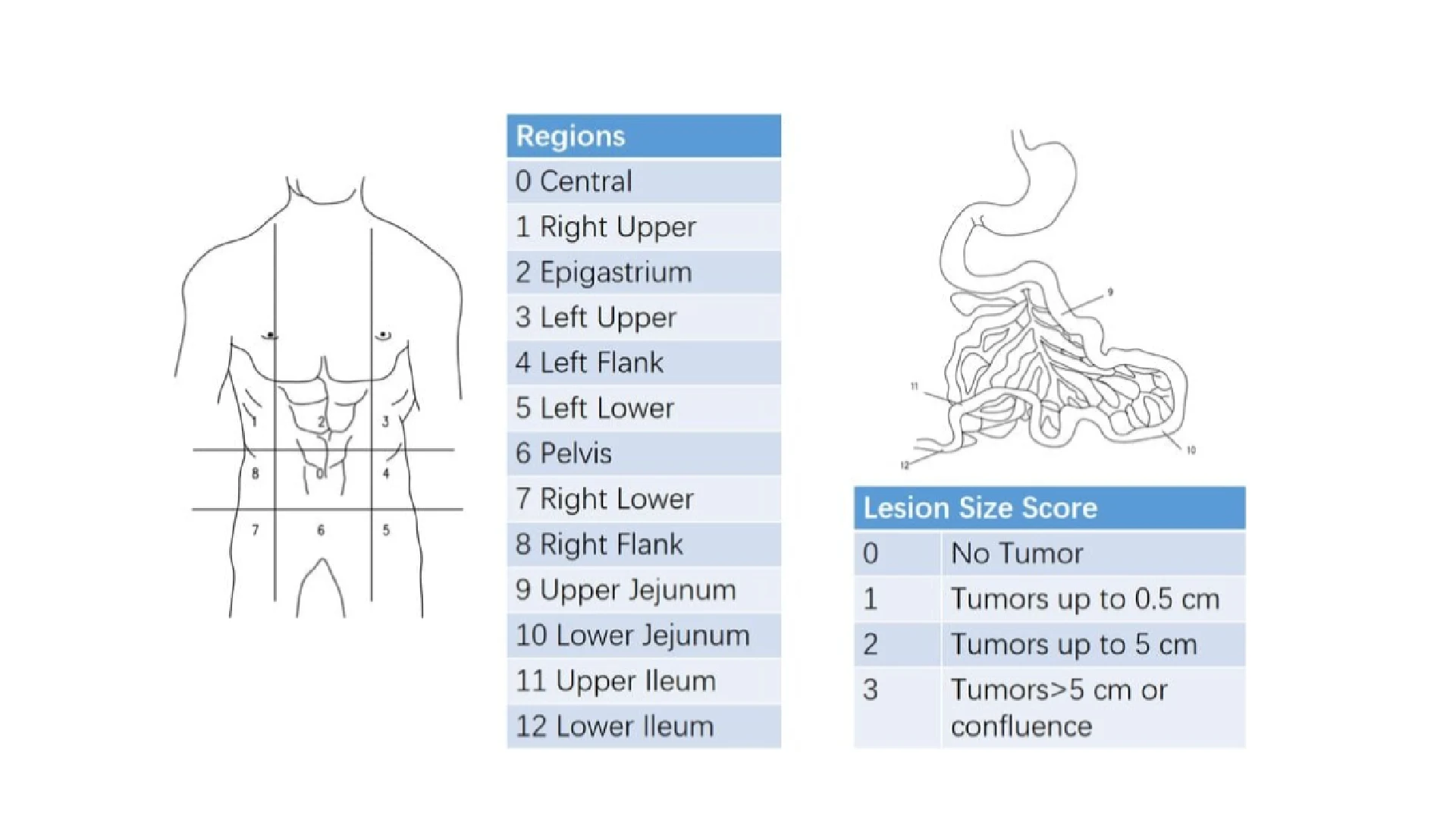
The peritoneal cancer index is the standard tool for measuring how much disease there is and where it is. It divides the abdomen into 13 regions and scores the size of the tumor implants in each one from 0 to 3, up to a maximum of 39 points.
A low score indicates more limited disease and therefore a greater likelihood of achieving complete cytoreduction. But no single figure automatically indicates or rules out surgery: the location of the implants can weigh as much as their number. A moderate PCI with diffuse involvement of the small bowel and its mesentery may be much less operable than a higher PCI concentrated in accessible areas.
It is also worth knowing that imaging tends to underestimate the real PCI, because millimeter-sized implants are not always visible. The final index is established in the operating room, during exploration.
No visible disease remains after surgery. This is the aim of the procedure and the scenario associated with the best long-term results.
Residual nodules smaller than 2.5 mm remain, a size that intraperitoneal chemotherapy can still penetrate. It is considered complete cytoreduction.
Larger residual disease remains. In this situation the benefit of HIPEC has not been shown and the strategy is reconsidered.
0 if there is no tumor, 1 if it measures less than 5 mm, 2 up to 5 cm and 3 above 5 cm or if implants are confluent.
Selection is the most decisive part of the whole process. These are the factors the board assesses before proposing cytoreductive surgery, with or without HIPEC.
How much disease there is and in which regions of the abdomen it is found, beyond the overall PCI score.
Whether it is realistic to remove all visible disease, or practically all of it. If it is not, surgery loses its curative intent.
Diffuse involvement of the small bowel, its mesentery or the hepatic pedicle is usually the real technical limit of the procedure.
Liver, lung or lymph node metastases do not automatically exclude surgery, but they change the strategy and the order of treatments.
Histological and molecular features of the original tumor, which anticipate how the disease will behave in the medium term.
How the disease has responded to the systemic chemotherapy given beforehand. Progression during treatment is an important prognostic factor.
It is a long and demanding operation. The patient's functional, cardiorespiratory and nutritional reserve affects the indication.
The final decision weighs the expected benefit against the individual surgical risk, and is always made by the multidisciplinary board.
Before proposing surgery, the real extent of the disease needs to be estimated as precisely as possible. The workup is built in layers, adding tests only when they provide information that can change the decision.
The standard initial test, with contrast and a complete abdominal protocol. It gives a first estimate of the extent and rules out distant disease.
In selected cases. It gives better definition of small peritoneal implants and of small bowel involvement.
Useful mainly for detecting disease outside the abdomen, although its sensitivity for millimeter-sized peritoneal implants is limited.
When significant doubts remain about the real extent. It allows the cavity to be seen directly, the PCI to be estimated and an unnecessary laparotomy to be avoided.
HIPEC does not replace intravenous chemotherapy. They are treatments with different ranges of action: HIPEC acts locally inside the abdominal cavity, while systemic treatment reaches the whole body, including any disease that may exist outside the peritoneum.
In most cases both are combined within the same strategy. Chemotherapy before surgery also shows how the disease behaves, which is in itself a selection criterion: a tumor that responds offers a very different surgical scenario from one that progresses despite treatment.
The Institute has specific equipment for high-complexity procedures.
HIPEC perfusion equipment allows precise control of the temperature and concentration of the drug.
Surgical instruments designed for complex peritonectomies.
Intraoperative imaging systems and 3D planning tools to prepare and guide surgery.
Digital follow-up platforms for monitoring the patient's progress and postoperative course.
At Quenet-Torrent we stay with you throughout the process, from the initial assessment of your case to follow-up after surgery.
We focus on treating advanced and metastatic cancer, with techniques such as cytoreduction with HIPEC or PIPAC, which not every center offers.
Surgeons, oncologists, radiologists, nutritionists and psychologists review your case together.
We follow the published evidence, and part of it was produced by the team itself: Dr. François Quénet led the PRODIGE 7 trial.
We have HIPEC perfusion equipment, robotic surgery and intraoperative imaging, which allow precise and, when possible, less invasive operations.
We explain each step of the treatment and answer your questions throughout the process.
Peritoneal carcinomatosis can originate from different types of cancer. Each one requires a specific treatment approach.
Peritoneal spread from tumors of the colon or rectum. Combined treatment with cytoreductive surgery.
More information about carcinomatosis of colorectal originPeritoneal involvement secondary to ovarian cancer. High response to cytoreductive surgery with HIPEC.
More information about carcinomatosis of ovarian originIncludes pseudomyxoma peritonei, one of the origins with the best long-term results.
More information about carcinomatosis of appendiceal originPeritoneal spread from gastric cancer. It requires careful selection of candidates.
More information about carcinomatosis of gastric originA primary tumor of the peritoneum. Specialized treatment with curative potential in selected cases.
More information about peritoneal mesotheliomaThese are the techniques we use to treat peritoneal carcinomatosis.
Hyperthermic intraperitoneal chemotherapy. The reference technique combined with cytoreductive surgery.
More information about HIPECPressurized intraperitoneal aerosol chemotherapy. An option for cases that are not candidates for radical surgery.
More information about PIPACA minimally invasive approach for diagnosis and treatment of peritoneal carcinomatosis.
More information about robotic surgeryThere is no single figure, and be wary of anyone who gives you one without having seen your case. The prognosis in peritoneal carcinomatosis depends mainly on three variables: the origin of the primary tumor, the extent of the disease measured by the PCI and, above all, whether or not complete cytoreduction is achieved.
That last factor is the one that changes the picture most. In well-selected patients in whom all visible disease can be removed, published results are far above those of systemic treatment alone, and cure can be achieved in around 20% of cases. In the PRODIGE 7 trial, with peritoneal disease of colorectal origin and complete cytoreduction, median survival exceeded 40 months in both groups of the study.
The origin of the tumor also makes important differences. Pseudomyxoma peritonei and peritoneal mesothelioma have the best long-term results; carcinomatosis of ovarian origin and colorectal origin are in an intermediate position; carcinomatosis of gastric origin is the most demanding in terms of selection.
Applying these figures to a specific case requires reviewing the tests, the histology and the previous course of the disease. That is exactly the purpose of a second opinion at a specialized unit.
Cytoreductive surgery with HIPEC is a high-complexity procedure, and explaining it openly is part of the treatment. The operation usually lasts between 6 and 12 hours in a single procedure.
Depending on the size of the procedure, the first hours may be spent in the intensive care unit. The hospital stay is, as a guide, between 7 and 14 days, although it depends on the extent of surgery and individual progress. After discharge, several weeks are usually needed to recover strength, appetite and the ability to carry out daily activities.
Like any major abdominal surgery, it carries risks that should be known: infection, bleeding, respiratory complications, thrombosis, changes in kidney function, delayed recovery of bowel transit, healing problems at the digestive joins and effects of the drugs used in HIPEC. The team's accumulated experience and case volume are consistently associated with lower rates of serious complications, but they do not eliminate them.
Follow-up after discharge includes checking healing, analyzing the final pathology results and deciding on subsequent systemic treatment.
The fact that complete cytoreduction is not feasible does not mean there is nothing to be done. It means the goal changes: from a potentially curative intent to control of the disease aimed at gaining time and quality of life.
In that scenario systemic treatment remains the core, and in selected cases PIPAC may be considered: chemotherapy given as a pressurized aerosol by laparoscopy, much less aggressive than cytoreductive surgery and repeatable over several sessions. It is especially useful for controlling ascites and the symptoms associated with peritoneal spread.
An initially unfavorable assessment is not always final. If the disease responds well to systemic treatment, a case can be reassessed and may become surgical.
Surgeons and oncologists who assess and treat peritoneal carcinomatosis at Quenet-Torrent Institute.

Oncological surgeon
View doctor: Dr. François Quenet"As an oncological surgeon who has devoted decades to treating peritoneal carcinomatosis, I believe our main mission is to change the approach to this stage of the disease."

Oncological surgeon
View doctor: Dr. Juan José Torrent"The key to success rests on three pillars: meticulous selection of candidates, mastery of specialized techniques and an expert multidisciplinary team."

Oncological surgeon
View doctor: Prof. Luis González Bayón"Peritoneal carcinomatosis is not a single disease, but a spectrum of clinical scenarios that require individual approaches."

Oncological surgeon
View doctor: Dr. Pablo Lozano Lominchar"Every intraoperative decision counts: maximum oncological radicality with minimum functional impact."

Medical oncologist
View doctor"Carcinomatosis surgery only makes sense within an overall strategy in which systemic treatments are coordinated with the operation."
Answers to the most common questions about diagnosis, treatment and prognosis.
No. It is an advanced disease, but in selected patients cytoreductive surgery, with or without HIPEC, can be considered with potentially curative intent. Around 20% of well-selected patients are cured, although there is always a risk of relapse that requires ongoing follow-up.
No. Cytoreduction is the surgery that removes all visible tumor implants from the peritoneum and the affected organs. HIPEC is a perfusion of heated chemotherapy given afterwards, inside the abdominal cavity, aimed at the microscopic disease that surgery cannot see. They are two separate steps of the same operation.
No, although this is a widespread belief. The indication depends on the origin of the tumor, the protocol available and previous treatments. The PRODIGE 7 trial showed that, in colorectal disease with short-course oxaliplatin, adding HIPEC did not improve survival. What is decisive is achieving complete cytoreduction, not the technique added to it.
No. HIPEC acts only inside the abdomen; intravenous chemotherapy reaches the whole body, including any disease that may exist outside the peritoneum. They are complementary treatments and are usually combined in the same strategy, with systemic chemotherapy before or after surgery depending on the origin of the tumor and the previous response.
No. Surgery is only indicated when all visible disease can be removed with an acceptable risk. The decision is made by the multidisciplinary board, assessing the extent and distribution of the disease, involvement of the small bowel and its mesentery, the biology of the tumor, the response to previous treatments and the general and nutritional condition.
It is the scale that quantifies the extent of peritoneal disease. It divides the abdomen into 13 regions and scores the size of the implants in each one, up to a maximum of 39. A low score is associated with a greater likelihood of complete cytoreduction, but no figure on its own indicates or rules out surgery.
It is major abdominal surgery and its risks should be known before deciding. The main ones are infection, bleeding, respiratory complications, thrombosis, kidney problems, delayed bowel transit, healing problems at the digestive joins and effects of the HIPEC drugs. The team's case volume is associated with fewer serious complications.
Usually between 6 and 12 hours, in a single operation under general anesthesia. The duration depends on the complexity of the case and the number of peritonectomies and resections needed. If HIPEC is added, the perfusion adds between 30 and 90 minutes within the same operation, without the patient returning to the operating room.
As a guide, between 7 and 14 days, with an initial stay in intensive care depending on the size of the operation. After discharge, several weeks are usually needed to recover strength, appetite and usual activity. Enhanced recovery protocols, with early mobilization and nutrition, shorten both periods.
Yes, in selected patients with limited recurrence and good general condition. Reoperation is assessed with the same criteria as the first: a real possibility of complete cytoreduction and a balance between risk and benefit. The time since the previous surgery and the response to systemic treatment received in between also weigh.
Pseudomyxoma peritonei and peritoneal mesothelioma have the best long-term results. Carcinomatosis of ovarian and colorectal origin is in an intermediate position, with proven benefit in well-selected patients. Carcinomatosis of gastric origin requires the strictest selection, because of its more aggressive biological behavior.
The goal becomes control of the disease and its symptoms. Systemic treatment remains the core and, in selected cases, PIPAC may be considered: pressurized aerosol chemotherapy given by laparoscopy, repeatable over several sessions. If the disease responds well, an initially non-surgical case can be reassessed.
More than 3,000 cytoreduction procedures with HIPEC and an international multidisciplinary team with protocols in line with the latest evidence. Part of that evidence was produced by the team itself: Dr. François Quénet led the PRODIGE 7 trial on the treatment of peritoneal metastases of colorectal origin.
We operate in two private hospitals in Spain. The same medical team treats you in Madrid and in Barcelona, with the same surgical and oncological protocols.

Private hospital in Pozuelo de Alarcón with a multidisciplinary team specialised in digestive surgical oncology.
View Memorial Publio Cordón Hospital
Private hospital in Barcelona where the team performs high-complexity surgical oncology.
View Centro Médico TeknonWonderful surgical team, among the best out there. Dr. Torrent (expert in peritoneal carcinomatosis) is an exceptional surgeon and an even better person. His coordinator is super kind, fast and efficient. The personal care is excellent and so are the results. This is of vital importance for cancer patients.
In the public healthcare system they gave my father a maximum of one year to live. They only offered him chemo and no hope, said it was impossible, that nothing could be done. He had several tumors inside the peritoneal sac with metastases. A year and a half later he is clean, completely cured. His latest PET scan came back clean. We are very happy. Thanks to Dr. Torrent and his team. THANK YOU.
Excellent professionals, especially Dr. Torrent, attentive at all times to the patient (my wife), operated for peritoneal pseudomyxoma. They helped us with all our needs since we came from outside Barcelona. Thank you Elisabeth. We are very grateful to Quenet Torrent Institute, thank you for everything.
I am a 63-year-old patient. They detected adrenal gland cancer and told me there was nothing to be done. I sought a second opinion and they told me about the Quenet Torrent team, specialists in complex operations. Dr. Torrent, from the first moment, told me they could operate. They operated and removed a large tumor mass. I spent a week in the ICU and a month on the ward. Every day he came morning and evening, no matter Saturday or Sunday. Never throw in the towel. I am happy to have found these professionals who gave me my life back. Thank you.
Many thanks for your attention. Dr. Torrent always attentive, involved and decisive. The reception staff very pleasant and always offering the best option. 100% RECOMMENDED. THANK YOU.
Dr. Torrent helped me make the best decision at a difficult moment. I think he is a great professional and a person capable of accompanying you and putting himself in another's shoes. Thank you for everything.
I have peritoneal carcinomatosis. When I sent my diagnosis to every center, practically all of them agreed on palliative chemo with little survival time, since I had a very aggressive type of cell. Until we reached Dr. Quenet, Dr. Torrent and their team. I can only confirm what their CV announces: they are far ahead of the rest. They saved my life, because during the operation the harmful cells that everyone had diagnosed, and that were the reason nobody would operate on me, were not there. This intervention has become the best investment of my life.
The best decision of my life was finding this excellent team of surgeons who saved my husband's life. At a prestigious international clinic in Madrid he was given up for lost with advanced peritoneal carcinomatosis from appendiceal cancer, and thanks to them, the best professionals in this field, he was operated on very successfully. A perfect recovery with no complications, because they were on top of his progress at all times. They have a great quality: from the start they were very honest and close. I can only be deeply grateful; we went to buy time and thanks to them my husband got his life back.
Dr. Torrent is a brilliant surgeon and a very approachable and warm doctor, whose manner reveals all the qualities that make him a great person and professional: perseverance, innate curiosity and a desire to learn, humility, sincerity and empathy. Going through an operation is undoubtedly an intense experience, physically and emotionally, in which anxieties arise and you feel very vulnerable. All of that is normal, and as his former patient I can say that his care and professionalism throughout the process were absolutely exceptional. I felt very supported by him, with the confidence of knowing I was in the best hands. I will always be grateful to him. Moltes gràcies Dr. Torrent!

Prognosis in peritoneal carcinomatosis does not depend on a single figure. Tumour type, extent, cytoreductive surgery and the patient's condition determine the course of the disease.
Clinical guide to the Peritoneal Cancer Index (PCI): what it measures, how it is calculated, how it is applied in treatment decisions and its relationship with cytoreductive surgery.
Survival in peritoneal carcinomatosis has improved greatly with cytoreductive surgery and HIPEC. Which factors influence the prognosis, and figures by tumour of origin.
Complete the form and schedule your appointment to speak directly with the surgeon.