Precise histological diagnosis
Correct classification of the tumor type determines the prognosis and the most suitable treatment.

At Quenet-Torrent Institute we treat appendiceal tumors with peritoneal spread. Tumors of the appendix are rare and usually have a good prognosis when treated with cytoreductive surgery and HIPEC at a specialized center.
CONTACT SPECIALISTPeritoneal carcinomatosis of appendiceal origin (including pseudomyxoma peritonei) is treated with complete cytoreduction (CRS) and HIPEC with mitomycin C, with 10-year survival above 70% at expert centers. At Quenet-Torrent Institute (Barcelona · Madrid), the team of Dr. Quenet, Dr. Torrent and Prof. González Bayón has performed more than 3,000 CRS+HIPEC procedures.
Appendiceal tumors are uncommon tumors that arise in the appendix. When these tumors spread to the peritoneum, they cause peritoneal carcinomatosis. Unlike other tumors, carcinomatosis of appendiceal origin has a favorable prognosis when properly treated.
There are several types of appendiceal tumor with different biological behavior:
Pseudomyxoma peritonei is the most characteristic presentation, with an accumulation of mucinous material ("jelly belly") in the abdominal cavity.
Appendiceal tumors often cause no symptoms for years and are found by chance, either during surgery for acute appendicitis or on imaging tests requested for another reason. When symptoms appear, the most common is pain in the lower right abdomen, which can mimic ordinary appendicitis and lead to diagnosis during surgery.
As the tumor produces mucin and spreads it to the peritoneum, the picture progresses to gradual abdominal swelling, an increase in abdominal girth from the build-up of mucinous material or ascites (known as pseudomyxoma peritonei), and sometimes a mass that can be felt in the abdomen. With any of these signs, especially if there is a history of appendicitis or an incidental finding on imaging, it is advisable to see a team specialized in peritoneal disease.
Peritoneal carcinomatosis of appendiceal origin occurs when a mucinous tumor of the appendix (LAMN, HAMN or mucinous adenocarcinoma) perforates the wall of the appendix or ruptures during surgery, releasing tumor cells and mucin into the peritoneal cavity. These cells implant on the peritoneal surfaces and keep producing mucinous material, giving rise to pseudomyxoma peritonei.
Unlike other digestive tumors, no environmental, dietary or hereditary risk factors have been clearly linked to mucinous tumors of the appendix. Their appearance is largely unpredictable and there is no established population screening. For this reason the diagnosis is usually an incidental finding, and once detected these cases should be referred to a center with specific experience.
Appendiceal tumors are very rare (1-2 cases per million per year), so many centers see few cases.
Correct classification of the tumor type determines the prognosis and the most suitable treatment.
Not all appendiceal tumors require cytoreductive surgery; some are cured with a simple appendectomy.
Results depend largely on the volume of cases treated and the experience of the surgical team.
Some patients undergo aggressive operations when they could benefit from active surveillance.
At Quenet-Torrent Institute we have treated hundreds of cases of appendiceal tumors.
The standard treatment is complete cytoreductive surgery (CRS) followed by HIPEC. It is one of the settings in which the CRS+HIPEC combination gives the best results.
Removal of all visible tumor, including peritonectomies, omentectomy and the visceral resections needed to achieve CC-0.
Perfusion of hyperthermic chemotherapy for 60-90 minutes to eliminate residual microscopic tumor cells.
The aim is to keep as much function as possible, avoiding extensive small bowel resections whenever possible.
The extent of surgery is adapted to the histological type and the distribution of the peritoneal disease.
In low-grade tumors with complete cytoreduction, 10-year survival exceeds 70-80%. These results correspond to centers with experience in this surgery.
Treating appendiceal tumors requires specific equipment and protocols.
Perfusion systems that allow HIPEC to be given with a closed technique for greater safety of the surgical team.
Collaboration with specialized pathologists for precise classification according to PSOGI criteria.
CT with a specific carcinomatosis protocol and preoperative PCI assessment.
Specific techniques for removing mucinous material and performing peritonectomies in pseudomyxoma.
Appendiceal tumors require a specialized approach. The team's experience influences the possibility of achieving complete cytoreduction, which is the main prognostic factor.
More than 3,000 cytoreduction procedures with HIPEC and hundreds of cases of appendiceal tumors treated.
It is the condition for achieving the 10-year survival above 70% described in low-grade tumors.
We give priority to preserving function, avoiding excessive resections when they are not oncologically necessary.
We collaborate with other centers specialized in pseudomyxoma peritonei on complex cases.
A specific follow-up protocol with tumor markers (CEA, CA 19-9, CA 125) and regular CT.
The prognosis of appendiceal tumors with peritoneal carcinomatosis is significantly better than that of other tumor origins. The factors that influence the prognosis are:
Histological type: Low-grade tumors (LAMN, mucinous adenomas) have an excellent prognosis, with 10-year survival of 70-90%. Mucinous adenocarcinomas have a worse prognosis, but still favorable compared with other tumors.
Quality of cytoreduction: Achieving CC-0 (no visible residual tumor) is the most important prognostic factor, and the experience of the surgical team has a strong influence on achieving it.
PCI (Peritoneal Cancer Index): A high PCI indicates greater extent, but even with high PCI scores the results are good if complete cytoreduction is achieved.
Our team has extensive experience in treating appendiceal tumors and pseudomyxoma peritonei.

Oncological surgeon
View doctor: Dr. François Quenet"Appendiceal tumors with pseudomyxoma peritonei are one of the settings where cytoreductive surgery and HIPEC offer the best results in all of oncology."

Oncological surgeon
View doctor: Dr. Juan José Torrent"The key in appendiceal tumors is correct histological classification and complete cytoreduction. With both, the results are excellent."

Oncological surgeon
View doctor: Prof. Luis González Bayón"Pseudomyxoma peritonei requires a meticulous approach. Every gram of mucin left behind can be the source of a recurrence."
Answers to the most common questions about diagnosis, treatment and prognosis.
Pseudomyxoma peritonei is the accumulation of mucinous, jelly-like material inside the abdominal cavity, almost always from a tumor of the appendix. It is colloquially known as jelly belly. It does not spread through the blood like other tumors: it spreads over the surface of the peritoneum, and that is exactly what allows it to be treated with surgery.
It depends on the type of tumor that causes it. Pseudomyxoma caused by a low-grade LAMN is considered a borderline tumor; pseudomyxoma caused by a mucinous adenocarcinoma is a cancer. Treatment is similar in both cases, but the histological type changes the prognosis and the need for subsequent chemotherapy.
It is excellent when treated at a specialized center. With complete cytoreduction and HIPEC, 10-year survival can exceed 70% in low-grade tumors. The key is not the size of the disease but removing it completely, something that depends directly on the experience of the surgical team.
No. Only mucinous tumors, those that produce mucin, can cause pseudomyxoma peritonei. Other tumors of the appendix, such as carcinoids or non-mucinous adenocarcinomas, behave differently and follow a different treatment. That is why the analysis of the removed appendix determines everything that follows.
Because the histological type determines the prognosis and the intensity of treatment. Low-grade tumors have an excellent prognosis and are usually resolved with surgery and HIPEC; high-grade tumors, with signet ring cells or adenocarcinoma, require more intensive strategies and consideration of systemic chemotherapy. It is the factor that weighs most in the decision.
Between 6 and 12 hours, depending on the extent of the disease and the resections needed. This time includes the HIPEC phase, which is 60 to 90 minutes of perfusion. It is a long operation because the aim is to clear the whole abdominal cavity, surface by surface, in a single procedure.
Yes. With complete cytoreduction and HIPEC, many patients are cured, especially with low-grade tumors. The condition is that no visible disease remains at the end of surgery, which is achieved much more often at centers with specific experience in this disease.
Check-ups every 6 months for the first 5 years, with tumor markers (CEA, CA 19-9 and CA 125) and abdominal CT. After that, yearly check-ups. Follow-up continues for a long time because pseudomyxoma can come back years later and, if detected early, can be operated on again.
Yes, especially when complete cytoreduction was not achieved in the first operation. The good news is that most recurrences can be treated again with further surgery at a specialized center. That is why follow-up with imaging and tumor markers is so important during the first years.
In low-grade tumors, generally not: surgery with HIPEC is the treatment. In high-grade tumors or mucinous adenocarcinomas, systemic chemotherapy may be indicated, before or after surgery. The decision is made individually by the multidisciplinary board, according to the histology and the extent.
We operate in two private hospitals in Spain. The same medical team treats you in Madrid and in Barcelona, with the same surgical and oncological protocols.

Private hospital in Pozuelo de Alarcón with a multidisciplinary team specialised in digestive surgical oncology.
View Memorial Publio Cordón Hospital
Private hospital in Barcelona where the team performs high-complexity surgical oncology.
View Centro Médico TeknonWonderful surgical team, among the best out there. Dr. Torrent (expert in peritoneal carcinomatosis) is an exceptional surgeon and an even better person. His coordinator is super kind, fast and efficient. The personal care is excellent and so are the results. This is of vital importance for cancer patients.
In the public healthcare system they gave my father a maximum of one year to live. They only offered him chemo and no hope, said it was impossible, that nothing could be done. He had several tumors inside the peritoneal sac with metastases. A year and a half later he is clean, completely cured. His latest PET scan came back clean. We are very happy. Thanks to Dr. Torrent and his team. THANK YOU.
Excellent professionals, especially Dr. Torrent, attentive at all times to the patient (my wife), operated for peritoneal pseudomyxoma. They helped us with all our needs since we came from outside Barcelona. Thank you Elisabeth. We are very grateful to Quenet Torrent Institute, thank you for everything.
I am a 63-year-old patient. They detected adrenal gland cancer and told me there was nothing to be done. I sought a second opinion and they told me about the Quenet Torrent team, specialists in complex operations. Dr. Torrent, from the first moment, told me they could operate. They operated and removed a large tumor mass. I spent a week in the ICU and a month on the ward. Every day he came morning and evening, no matter Saturday or Sunday. Never throw in the towel. I am happy to have found these professionals who gave me my life back. Thank you.
Many thanks for your attention. Dr. Torrent always attentive, involved and decisive. The reception staff very pleasant and always offering the best option. 100% RECOMMENDED. THANK YOU.
Dr. Torrent helped me make the best decision at a difficult moment. I think he is a great professional and a person capable of accompanying you and putting himself in another's shoes. Thank you for everything.
I have peritoneal carcinomatosis. When I sent my diagnosis to every center, practically all of them agreed on palliative chemo with little survival time, since I had a very aggressive type of cell. Until we reached Dr. Quenet, Dr. Torrent and their team. I can only confirm what their CV announces: they are far ahead of the rest. They saved my life, because during the operation the harmful cells that everyone had diagnosed, and that were the reason nobody would operate on me, were not there. This intervention has become the best investment of my life.
The best decision of my life was finding this excellent team of surgeons who saved my husband's life. At a prestigious international clinic in Madrid he was given up for lost with advanced peritoneal carcinomatosis from appendiceal cancer, and thanks to them, the best professionals in this field, he was operated on very successfully. A perfect recovery with no complications, because they were on top of his progress at all times. They have a great quality: from the start they were very honest and close. I can only be deeply grateful; we went to buy time and thanks to them my husband got his life back.
Dr. Torrent is a brilliant surgeon and a very approachable and warm doctor, whose manner reveals all the qualities that make him a great person and professional: perseverance, innate curiosity and a desire to learn, humility, sincerity and empathy. Going through an operation is undoubtedly an intense experience, physically and emotionally, in which anxieties arise and you feel very vulnerable. All of that is normal, and as his former patient I can say that his care and professionalism throughout the process were absolutely exceptional. I felt very supported by him, with the confidence of knowing I was in the best hands. I will always be grateful to him. Moltes gràcies Dr. Torrent!

Prognosis in peritoneal carcinomatosis does not depend on a single figure. Tumour type, extent, cytoreductive surgery and the patient's condition determine the course of the disease.
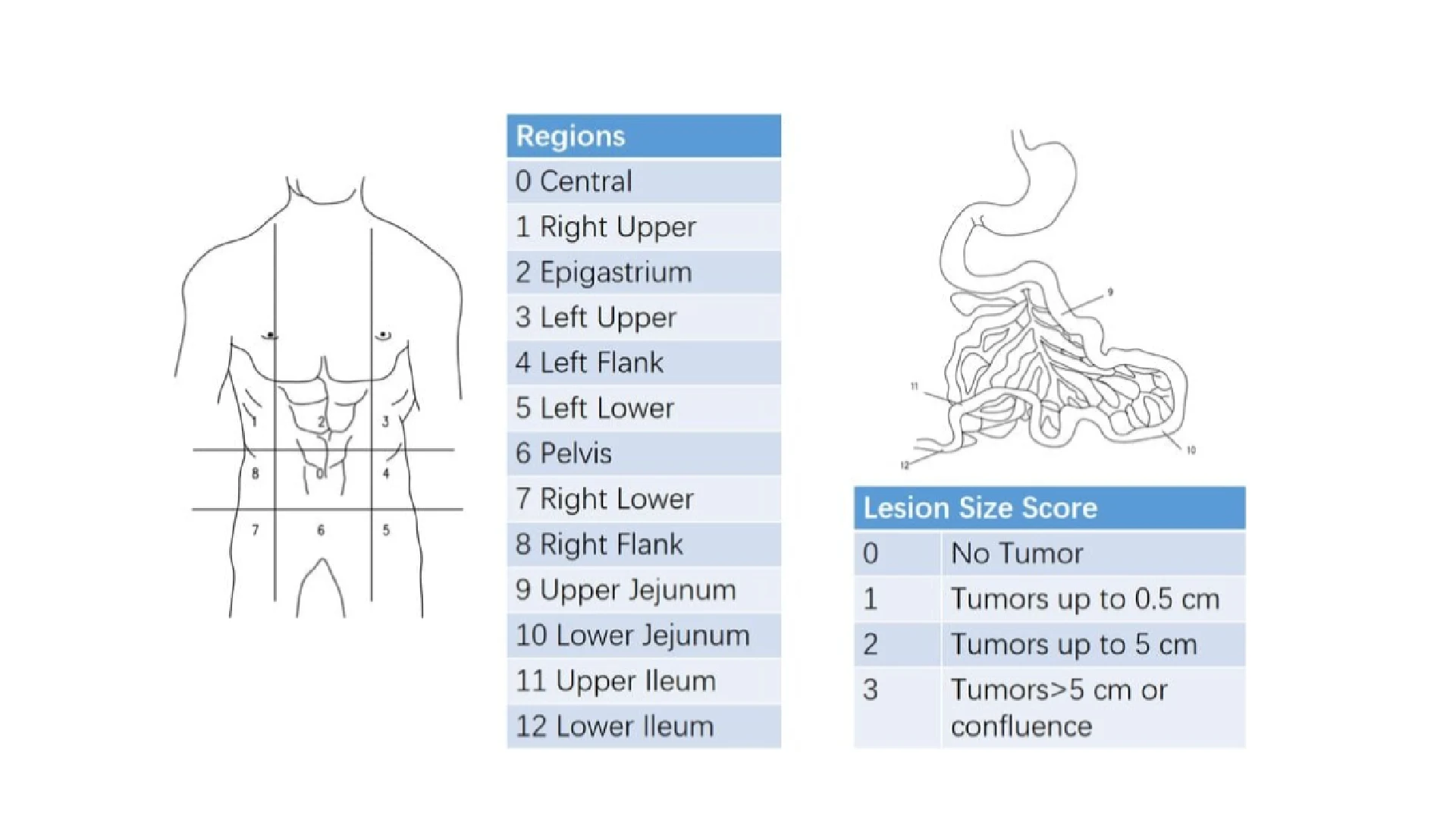
Clinical guide to the Peritoneal Cancer Index (PCI): what it measures, how it is calculated, how it is applied in treatment decisions and its relationship with cytoreductive surgery.
Cytoreductive surgery is used in the treatment of advanced cancers with abdominal involvement. We explain what it is, when it is indicated, how it is performed and what results it offers.
Complete the form and schedule your appointment to speak directly with the surgeon.