Confirm the diagnosis
Confirm the histological diagnosis and classification of the tumor (low grade vs high grade).

At Quenet-Torrent Institute we have a unit specialized in the treatment of pseudomyxoma peritonei, a rare disease that requires specific experience in peritoneal surgery. We treat it with complete cytoreductive surgery plus HIPEC, which in selected cases allows 10-year survival above 70%.
CONTACT SPECIALISTPseudomyxoma peritonei (a mucinous tumor of appendiceal origin) is treated with complete cytoreductive surgery and HIPEC, with curative potential (10-year survival above 70% at expert centers). At Quenet-Torrent Institute (Barcelona · Madrid), the team of Dr. Quenet, Dr. Torrent and Prof. González Bayón has performed more than 3,000 procedures in complex peritoneal surgery.
Pseudomyxoma peritonei (PMP) is a rare disease characterized by the progressive accumulation of mucin (a jelly-like substance) in the abdominal cavity. It usually originates from a mucinous tumor of the appendix, although it can also come from other organs such as the ovary or colon.
This condition causes "jelly belly" syndrome, in which tumor mucin gradually builds up, compressing the abdominal organs and causing symptoms such as abdominal swelling, loss of appetite, changes in bowel habits and general discomfort. Without proper treatment, the disease inevitably progresses, but with specialized surgery a large proportion of patients are cured.
Pseudomyxoma peritonei grows very slowly and its symptoms appear late and are non-specific. The most characteristic sign is a progressive increase in abdominal girth, with swelling, a feeling of fullness, mild abdominal pain and hernias with no apparent cause. In some cases there are changes in bowel transit, such as constipation or changes in bowel rhythm.
In women, the presentation can be mistaken for an ovarian mass, which sometimes delays the correct diagnosis. With any unexplained progressive abdominal swelling, especially if it comes with early fullness or a mass that can be felt on examination, it is advisable to see a specialist in peritoneal surgery to rule out this disease and guide the imaging workup appropriately.
In the vast majority of cases, pseudomyxoma peritonei originates from a mucinous tumor of the appendix (called LAMN or HAMN depending on its grade). When this tumor ruptures, it releases mucin-producing cells into the peritoneal cavity, where they implant and produce the characteristic jelly-like build-up. Less often, the origin is in the ovary, the colon or other abdominal organs.
Unlike other tumors, pseudomyxoma peritonei has no clearly identified environmental or hereditary risk factors, so it cannot be prevented. No known exposure (tobacco, diet, family history) significantly increases the likelihood of developing it. It is a sporadic tumor whose origin is essentially a structural abnormality of the appendix that can appear in any adult, with a slight predominance in women.
As it is a very uncommon disease, it should be assessed by a team with experience in this condition.
Confirm the histological diagnosis and classification of the tumor (low grade vs high grade).
Assess whether complete cytoreduction with adequate margins is possible.
Decide whether HIPEC is indicated and how to apply it.
Make sure treatment is carried out at a center with proven experience in this specific disease.
The standard treatment for pseudomyxoma peritonei is complete cytoreductive surgery (CRS) followed by HIPEC. With this approach, 10-year survival exceeds 70% in well-selected cases.
Complete removal of all visible mucin and tumor tissue, including peritonectomies and resection of affected organs when necessary.
Heated chemotherapy given directly into the abdominal cavity to eliminate residual microscopic tumor cells.
In cases of very extensive disease, treatment can be carried out in two separate operations.
A rigorous follow-up protocol with tumor markers and imaging to detect any recurrence early.
Quenet-Torrent Institute has the surgical equipment needed to treat pseudomyxoma peritonei.
Precise control of temperature and flow during the perfusion of intraperitoneal chemotherapy.
Surgical instruments designed for complex peritonectomies and extensive resections.
Real-time intraoperative monitoring systems for greater safety.
An oncological intensive care unit with specific postoperative protocols.
At Quenet-Torrent we stay with you throughout the process, from the initial assessment of your case to follow-up after surgery.
We focus on treating advanced and metastatic cancer, with techniques such as cytoreduction with HIPEC, which not every center offers.
Surgeons, oncologists, radiologists, nutritionists and psychologists review your case together.
We follow the published scientific evidence and review our protocols when new data appear.
We have HIPEC perfusion equipment, instruments for peritonectomies and intraoperative monitoring, which allow precise and safer operations.
We explain each step of the treatment and answer your questions throughout the process.
Surgeons on the team who treat pseudomyxoma peritonei.

Oncological surgeon
View doctor: Dr. François Quenet"As an oncological surgeon who has devoted decades to treating peritoneal carcinomatosis, I believe our main mission is to change the approach to this stage of the disease."
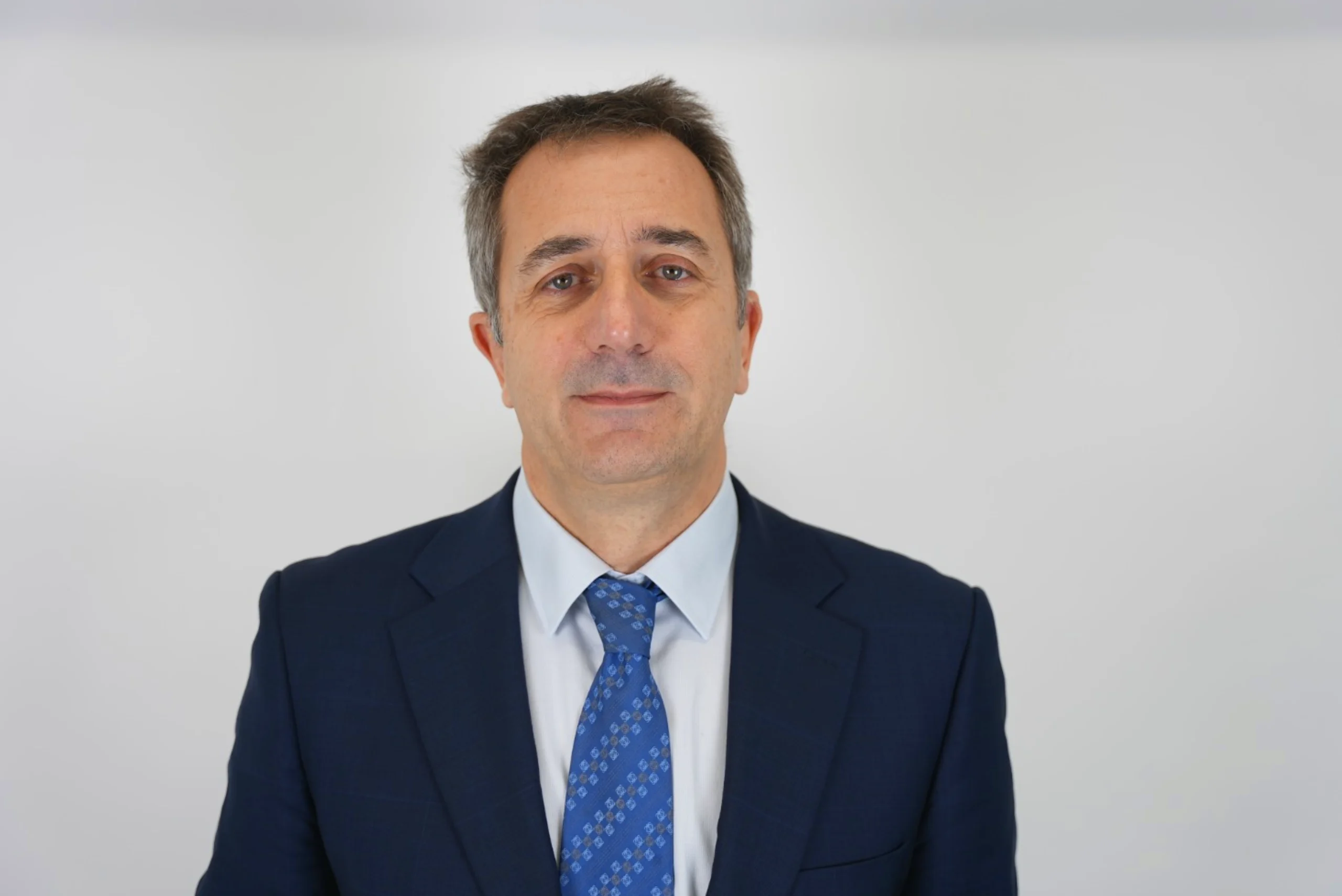
Oncological surgeon
View doctor: Dr. Juan José Torrent"The key to success rests on three pillars: meticulous selection of candidates, mastery of specialized techniques and an expert multidisciplinary team."
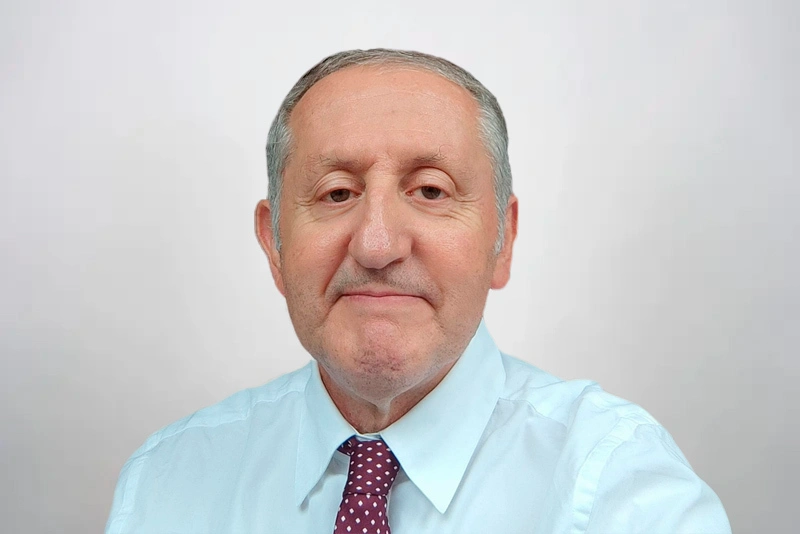
Oncological surgeon
View doctor: Prof. Luis González Bayón"Peritoneal carcinomatosis is not a single disease, but a spectrum of clinical scenarios that require individual approaches."
Answers to the most common questions about diagnosis, treatment and prognosis.
Yes. Pseudomyxoma peritonei can be cured with complete cytoreductive surgery and HIPEC, especially in low-grade tumors. In well-selected cases, 10-year survival exceeds 70%. The condition is that no visible disease remains at the end of surgery, which requires a team with specific experience.
It is almost always caused by a mucinous tumor of the appendix, although it can also come from the ovary, the colon or other organs. When that tumor ruptures, it releases into the abdominal cavity cells that produce mucin and keep making it. That mucin builds up progressively and is what gives the condition its characteristic appearance.
Progressive abdominal swelling, an increase in abdominal girth, a feeling of fullness, loss of appetite, changes in bowel rhythm and general discomfort. These symptoms are non-specific and appear slowly, so many patients wait months for a diagnosis. It is not unusual for it to be discovered during an operation for another reason.
Yes. With a localized recurrence, further cytoreductive surgery can be considered, with the same chances as the first. The condition is again to remove all visible disease. The prognosis depends on the extent of the relapse, the histological grade and the general condition, and some patients are operated on several times over the years.
No. Pseudomyxoma is a very rare disease, with an incidence of about one case per million people per year. Most hospitals see very few, and here the result depends on achieving complete cytoreduction in the first operation. That is why a team with proven experience in peritoneal surgery is advisable.
Its effectiveness is limited: pseudomyxoma responds poorly to systemic chemotherapy, so the treatment of choice is cytoreductive surgery with HIPEC. Chemotherapy may be considered in high-grade cases or when the disease cannot be resected, but it does not replace surgery in low-grade tumors.
It is major surgery, with a risk of bleeding, infection, leakage at the bowel joins and thromboembolic complications. At specialized centers mortality is below 2% and serious complications are uncommon. The difference between a high-volume center and one without that volume shows precisely in these figures.
The hospital stay is usually 10 to 14 days and full recovery takes between 2 and 3 months. The return to normal activity is gradual and depends on the extent of surgery and whether there were bowel resections. Enhanced recovery protocols shorten the stay and reduce complications.
Check-ups with tumor markers (CEA, CA 19-9 and CA 125) and CT every 3 to 6 months during the first years, then yearly check-ups. Follow-up continues for a long time because pseudomyxoma can come back years later and, if detected in time, can again be operated on with curative intent.
At centers with proven experience in surgery for peritoneal carcinomatosis and, specifically, pseudomyxoma. It is worth asking how many cases the team treats each year and what complete cytoreduction rate it achieves. Our institute treats this disease routinely, with a multidisciplinary board and a second opinion service for patients from other centers.
We operate in two private hospitals in Spain. The same medical team treats you in Madrid and in Barcelona, with the same surgical and oncological protocols.

Private hospital in Pozuelo de Alarcón with a multidisciplinary team specialised in digestive surgical oncology.
View Memorial Publio Cordón Hospital
Private hospital in Barcelona where the team performs high-complexity surgical oncology.
View Centro Médico TeknonWonderful surgical team, among the best out there. Dr. Torrent (expert in peritoneal carcinomatosis) is an exceptional surgeon and an even better person. His coordinator is super kind, fast and efficient. The personal care is excellent and so are the results. This is of vital importance for cancer patients.
In the public healthcare system they gave my father a maximum of one year to live. They only offered him chemo and no hope, said it was impossible, that nothing could be done. He had several tumors inside the peritoneal sac with metastases. A year and a half later he is clean, completely cured. His latest PET scan came back clean. We are very happy. Thanks to Dr. Torrent and his team. THANK YOU.
Excellent professionals, especially Dr. Torrent, attentive at all times to the patient (my wife), operated for peritoneal pseudomyxoma. They helped us with all our needs since we came from outside Barcelona. Thank you Elisabeth. We are very grateful to Quenet Torrent Institute, thank you for everything.
I am a 63-year-old patient. They detected adrenal gland cancer and told me there was nothing to be done. I sought a second opinion and they told me about the Quenet Torrent team, specialists in complex operations. Dr. Torrent, from the first moment, told me they could operate. They operated and removed a large tumor mass. I spent a week in the ICU and a month on the ward. Every day he came morning and evening, no matter Saturday or Sunday. Never throw in the towel. I am happy to have found these professionals who gave me my life back. Thank you.
Many thanks for your attention. Dr. Torrent always attentive, involved and decisive. The reception staff very pleasant and always offering the best option. 100% RECOMMENDED. THANK YOU.
Dr. Torrent helped me make the best decision at a difficult moment. I think he is a great professional and a person capable of accompanying you and putting himself in another's shoes. Thank you for everything.
I have peritoneal carcinomatosis. When I sent my diagnosis to every center, practically all of them agreed on palliative chemo with little survival time, since I had a very aggressive type of cell. Until we reached Dr. Quenet, Dr. Torrent and their team. I can only confirm what their CV announces: they are far ahead of the rest. They saved my life, because during the operation the harmful cells that everyone had diagnosed, and that were the reason nobody would operate on me, were not there. This intervention has become the best investment of my life.
The best decision of my life was finding this excellent team of surgeons who saved my husband's life. At a prestigious international clinic in Madrid he was given up for lost with advanced peritoneal carcinomatosis from appendiceal cancer, and thanks to them, the best professionals in this field, he was operated on very successfully. A perfect recovery with no complications, because they were on top of his progress at all times. They have a great quality: from the start they were very honest and close. I can only be deeply grateful; we went to buy time and thanks to them my husband got his life back.
Dr. Torrent is a brilliant surgeon and a very approachable and warm doctor, whose manner reveals all the qualities that make him a great person and professional: perseverance, innate curiosity and a desire to learn, humility, sincerity and empathy. Going through an operation is undoubtedly an intense experience, physically and emotionally, in which anxieties arise and you feel very vulnerable. All of that is normal, and as his former patient I can say that his care and professionalism throughout the process were absolutely exceptional. I felt very supported by him, with the confidence of knowing I was in the best hands. I will always be grateful to him. Moltes gràcies Dr. Torrent!
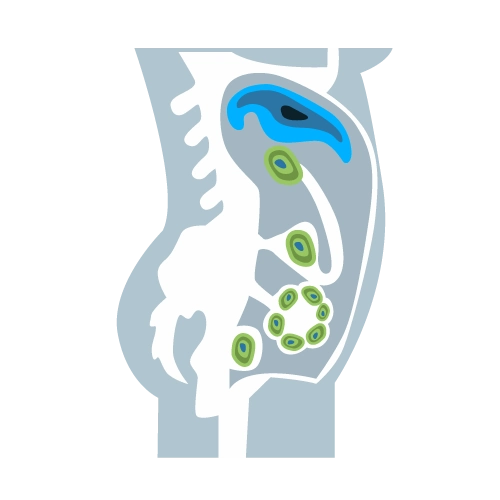
Study published in the International Journal of Hyperthermia on two-stage cytoreductive surgery with HIPEC for bulky pseudomyxoma peritonei: all 8 patients treated achieved a complete pathological response.

Prognosis in peritoneal carcinomatosis does not depend on a single figure. Tumour type, extent, cytoreductive surgery and the patient's condition determine the course of the disease.
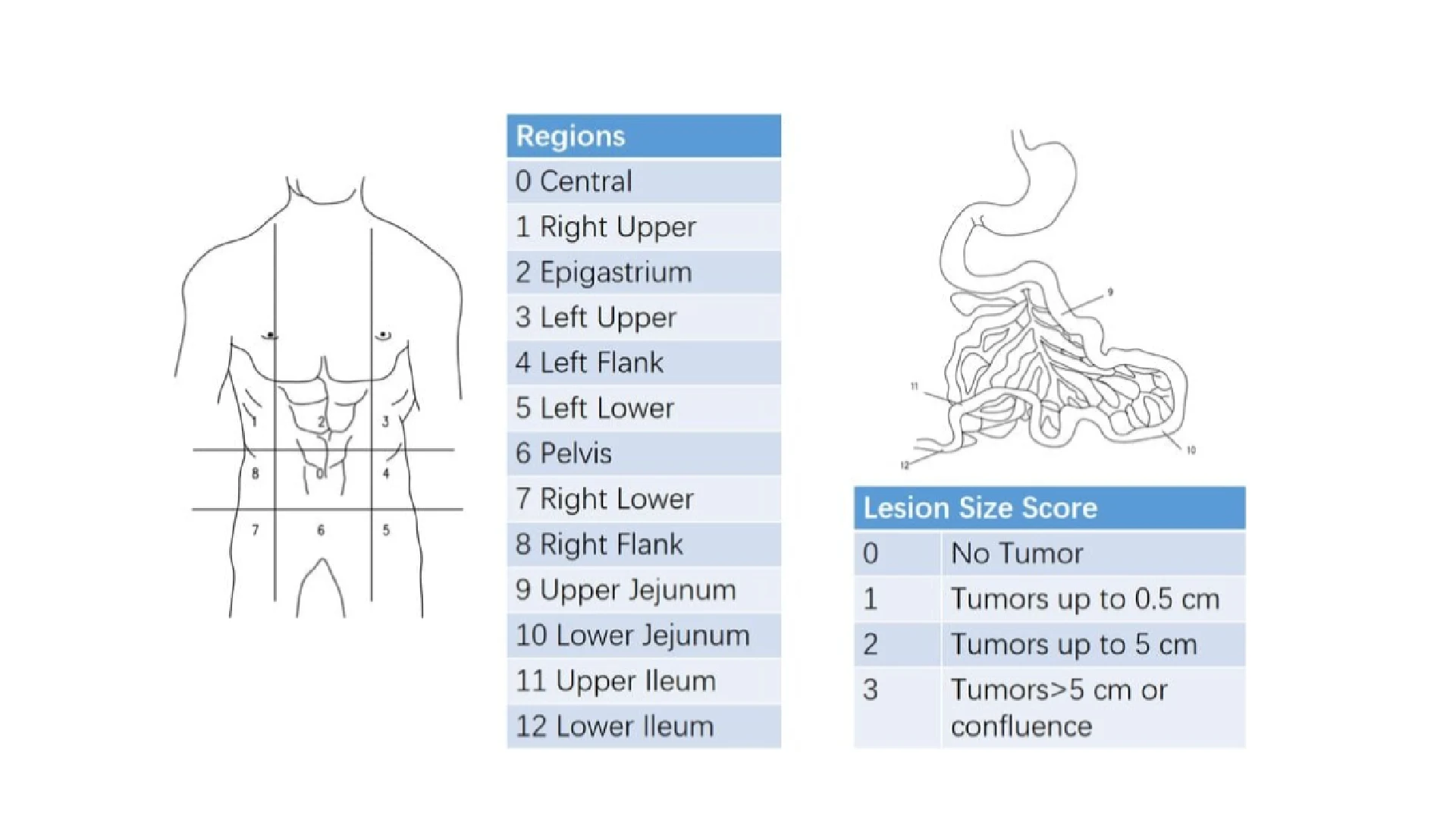
Clinical guide to the Peritoneal Cancer Index (PCI): what it measures, how it is calculated, how it is applied in treatment decisions and its relationship with cytoreductive surgery.
Complete the form and schedule your appointment to speak directly with the surgeon.