
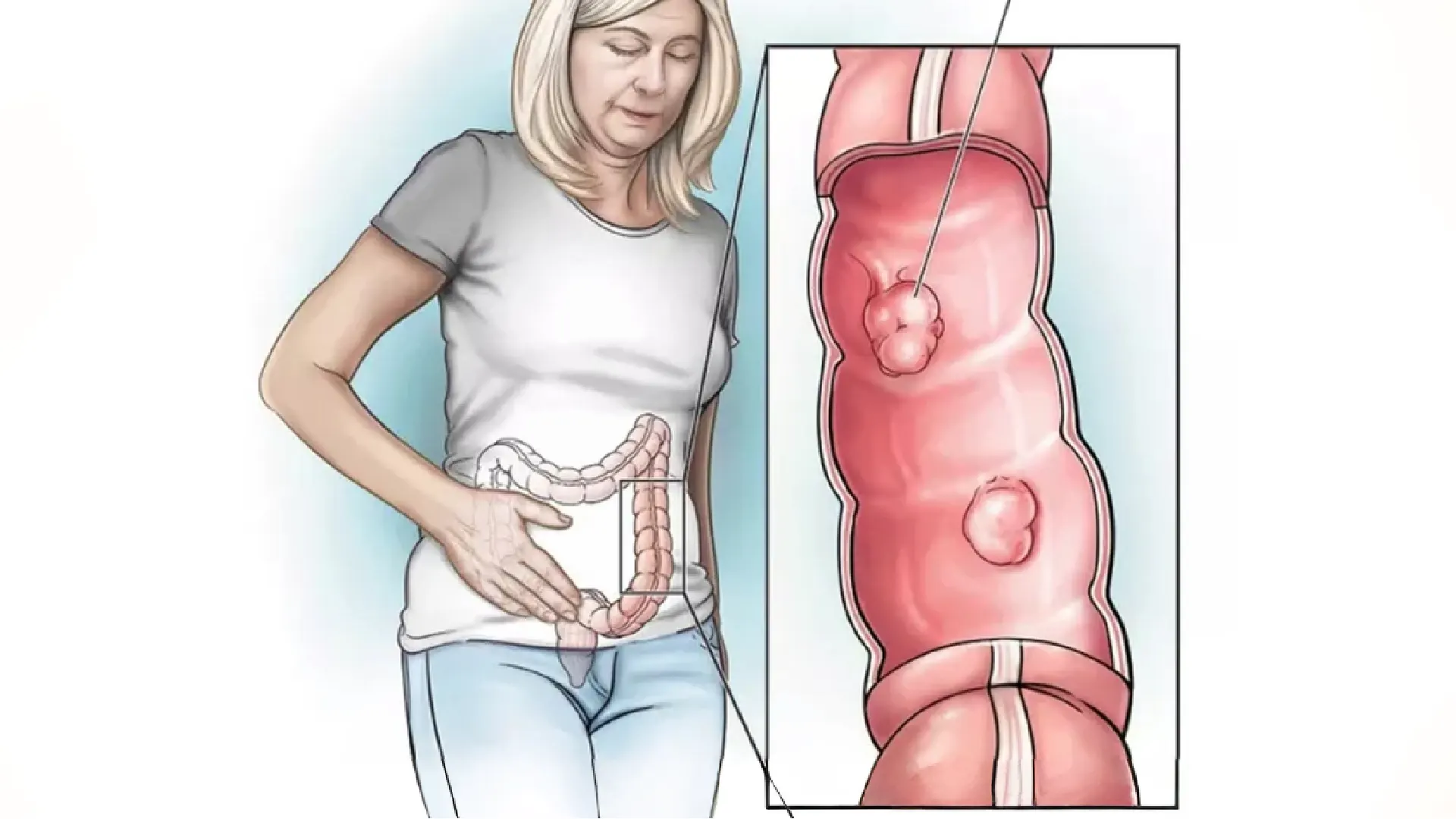
Lynch syndrome is the most common hereditary cause of colorectal cancer. It is caused by a change in one of the genes that repair DNA errors, it is passed from parents to children and it raises the risk of colon and rectal cancer, endometrial cancer and other tumors. Having it does not mean you will get cancer, but it does mean you need colonoscopies earlier and more often than other people, and that your family can be tested.
What is Lynch syndrome?
It is an inherited change in one of the DNA repair genes, the MMR genes: MLH1, MSH2, MSH6 or PMS2, and in some cases EPCAM. Because of it, tumors appear earlier and more often than in the general population.
Every time a cell divides it copies its DNA, and errors slip into that copy. These genes act as a proofreader that fixes them. Someone born with one of them altered has a proofreader that fails, errors build up and a tumor is more likely to form.
It is not rare. In the United States an estimated 1 in 279 people carry a variant associated with Lynch syndrome, and many do not know it because nobody has looked for it in their family.
How is Lynch syndrome inherited?
Inheriting the altered copy from one parent is enough. Each child of a person with Lynch syndrome has a 50% chance of inheriting it, whether a son or a daughter.
Those who do not inherit it do not pass it on to their children, and their risk is the same as anyone else's. That is why genetic testing matters so much for siblings and children: on average, for half of them it removes a worry and colonoscopies they do not need.
Which cancers does it cause?
Mainly colorectal cancer and, in women, endometrial cancer. It also raises the risk of ovarian cancer and, less often, of tumors of the stomach, small bowel, urinary tract, bile ducts, pancreas, brain or some skin tumors.
The risk is not the same for every carrier. It depends mainly on the gene involved: changes in MLH1 and MSH2 carry a higher and earlier risk of colorectal cancer than changes in MSH6 and PMS2. That is why surveillance is tailored to the gene rather than being the same for everyone.
When should Lynch syndrome be suspected?
When a family has several cases of colorectal or endometrial cancer, especially in successive generations, when someone develops one before 50, or when one person has had more than one. But family history is not enough, because many people with the syndrome have no clear history.
That is why the 2021 European guideline recommends testing every colorectal cancer, whatever the patient's age and whether or not there are cases in the family, and doing the same for endometrial cancers. The test is done on the tumor itself, either with immunohistochemistry to check whether the repair proteins are present (MMR testing) or with a microsatellite instability (MSI) test. At Memorial Publio Cordón Hospital we can perform this test on the tumor of any patient with colorectal cancer.
How is the diagnosis confirmed?
With a genetic blood test, as part of a genetic counseling appointment. A repair defect in the tumor is not enough to diagnose Lynch syndrome, because sometimes the defect arises only in the tumor and is not inherited.
In genetic counseling, what the test may show is explained beforehand and what the result means is explained afterwards. When the change is found, testing is offered to close relatives. Those who carry it start surveillance. Those who do not follow routine colorectal cancer screening like anyone else.
What check-ups does someone with Lynch syndrome need?
Regular colonoscopies from age 25 or 35, depending on the gene. The European guideline (EHTG and ESCP, 2021) sums it up as follows:
- MLH1 and MSH2: from age 25, every 2 to 3 years.
- MSH6: from age 35, every 2 to 3 years.
- PMS2: from age 35; every 5 years may be considered.
Colonoscopy is used to remove polyps before they turn into cancer, and in Lynch syndrome that change happens faster than in the general population. So the intervals should not be stretched even if the last colonoscopies were clear. Gynecological check-ups and prevention of endometrial and ovarian cancer are decided with the gynecology team.
The same guideline recommends telling carriers that taking aspirin daily has a high probability of reducing their cancer risk, based on the results of the CAPP2 trial. It is not something to start on your own: aspirin also increases the risk of bleeding, and whether it is right for you and at what dose is decided with your doctor.
Does surgery change if I have Lynch syndrome and am diagnosed with cancer?
It may, especially in colon cancer. With a change in MLH1 or MSH2, the European guideline prefers removing most of the colon rather than just the section with the tumor, to reduce the risk of a second cancer in the remaining colon.
With MSH6 or PMS2 standard surgery is recommended, and in rectal cancer standard surgery is still the right choice in most cases. A wider resection also changes bowel habits, so it is not a decision made on paper: we discuss it with the patient with their genetic result in front of us. At the Memorial every case is reviewed by a team of surgeons, oncologists, radiologists and gastroenterologists before treatment is decided, and we operate robotically whenever possible.
There is another change that matters. Tumors with a repair defect respond very well to immunotherapy. In a trial published in 2022, twelve patients with locally advanced rectal cancer and a repair defect received dostarlimab for six months, and in all of them the tumor disappeared with no need for radiotherapy or surgery during follow-up. It is a small group and follow-up is still short, but it has changed how these cases are approached and links to the watch and wait strategy.
Women who no longer wish to have children may consider preventive gynecological surgery, which removes the uterus, fallopian tubes and ovaries. It depends on the gene, age and what each woman wants; we discussed it at the preventive surgery symposium.
I have relatives with colon cancer but no Lynch syndrome. Do I need check-ups?
Probably yes, although less intensive than with the syndrome. Many families have several cases of colorectal cancer without a genetic cause being found, and their risk is still higher than the general population's.
The usual approach is to start colonoscopies before 50 and repeat them more often than in routine screening. When and how often depends on how many relatives are affected, how closely related they are and how old they were at diagnosis. That is what we assess in the high-risk clinic.
Frequently asked questions
Is Lynch syndrome serious?
It greatly raises the risk of some cancers, but with proper surveillance most tumors are prevented or found early. Having it does not mean you will get cancer.
If my father or mother has Lynch syndrome, do I have it?
You have a 50% chance of having inherited it. A genetic blood test confirms or rules it out, and if you do not have it your risk is that of the general population.
At what age should colonoscopies start with Lynch syndrome?
According to the European guideline, at 25 if the change is in MLH1 or MSH2, and at 35 if it is in MSH6 or PMS2. They are repeated every 2 to 3 years, or every 5 for PMS2.
How do I know if my colon cancer is hereditary?
The tumor is tested for a DNA repair defect, which the European guideline recommends for every colorectal cancer. If it has one, a genetic blood test is considered at a genetic counseling appointment.
Can cancer be prevented if I have Lynch syndrome?
Largely, yes: regular colonoscopies remove polyps before they become cancer. Daily aspirin may lower the risk but has to be decided with your doctor, and women can consider preventive gynecological surgery.
Does Lynch syndrome affect men and women the same way?
It is inherited the same way and the colorectal cancer risk affects both. Women also have a risk of endometrial and ovarian cancer that needs its own surveillance.
References
- Seppälä TT, Latchford A, Negoi I, et al. European guidelines from the EHTG and ESCP for Lynch syndrome: an updated third edition of the Mallorca guidelines based on gene and gender. Br J Surg. 2021;108:484-498. doi:10.1002/bjs.11902.
- Burn J, Sheth H, Elliott F, et al. Cancer prevention with aspirin in hereditary colorectal cancer (Lynch syndrome), 10-year follow-up and registry-based 20-year data in the CAPP2 study. Lancet. 2020;395:1855-1863. doi:10.1016/S0140-6736(20)30366-4.
- Cercek A, Lumish M, Sinopoli J, et al. PD-1 blockade in mismatch repair-deficient, locally advanced rectal cancer. N Engl J Med. 2022;386:2363-2376. doi:10.1056/NEJMoa2201445.
- MedlinePlus Genetics, U.S. National Library of Medicine. Lynch syndrome.
This information is for general guidance and does not replace an assessment by your doctor or genetic counseling.