1. Diagnosis and staging
Colonoscopy with biopsy, CT scan, pelvic MRI and blood tests with tumor markers to find out how far the tumor has spread.

If the tumor disappears completely after chemotherapy and radiotherapy, some patients can keep their rectum without surgery up front, under very close follow-up.
Have my case reviewedWatch and wait is considered in rectal cancer when, after radiotherapy and chemotherapy, no tumor can be seen on examination, endoscopy or MRI. Immediate surgery is avoided and check-ups are done every 3 months. If the tumor comes back, it is operated on, and in most cases that surgery is still possible and effective.
For years, treatment of rectal cancer always ended in the operating room. Today most patients first receive radiotherapy and chemotherapy to shrink the tumor, and in some of them the tumor disappears completely. This is called a clinical complete response.
These patients can be offered an alternative to immediate surgery: watching the rectum closely with frequent check-ups and operating only if the tumor comes back. This is known as watch and wait, rectal preservation or active surveillance. The aim is to keep the rectum and avoid major surgery when it is not needed.
Watch and wait does not mean stopping treatment. The treatment has been given, and what changes is that surgery is kept for those who need it.
The process follows the same steps as any rectal cancer until the response to the initial treatment is assessed.
Colonoscopy with biopsy, CT scan, pelvic MRI and blood tests with tumor markers to find out how far the tumor has spread.
Radiotherapy, with or without chemotherapy, and systemic chemotherapy. In most cases it lasts several weeks or months.
The rectum is checked with clinical examination, endoscopy and MRI to see whether any tumor remains.
If tumor remains, surgery is performed, aiming to preserve the sphincter. If the response is complete, close follow-up without immediate surgery is an option.
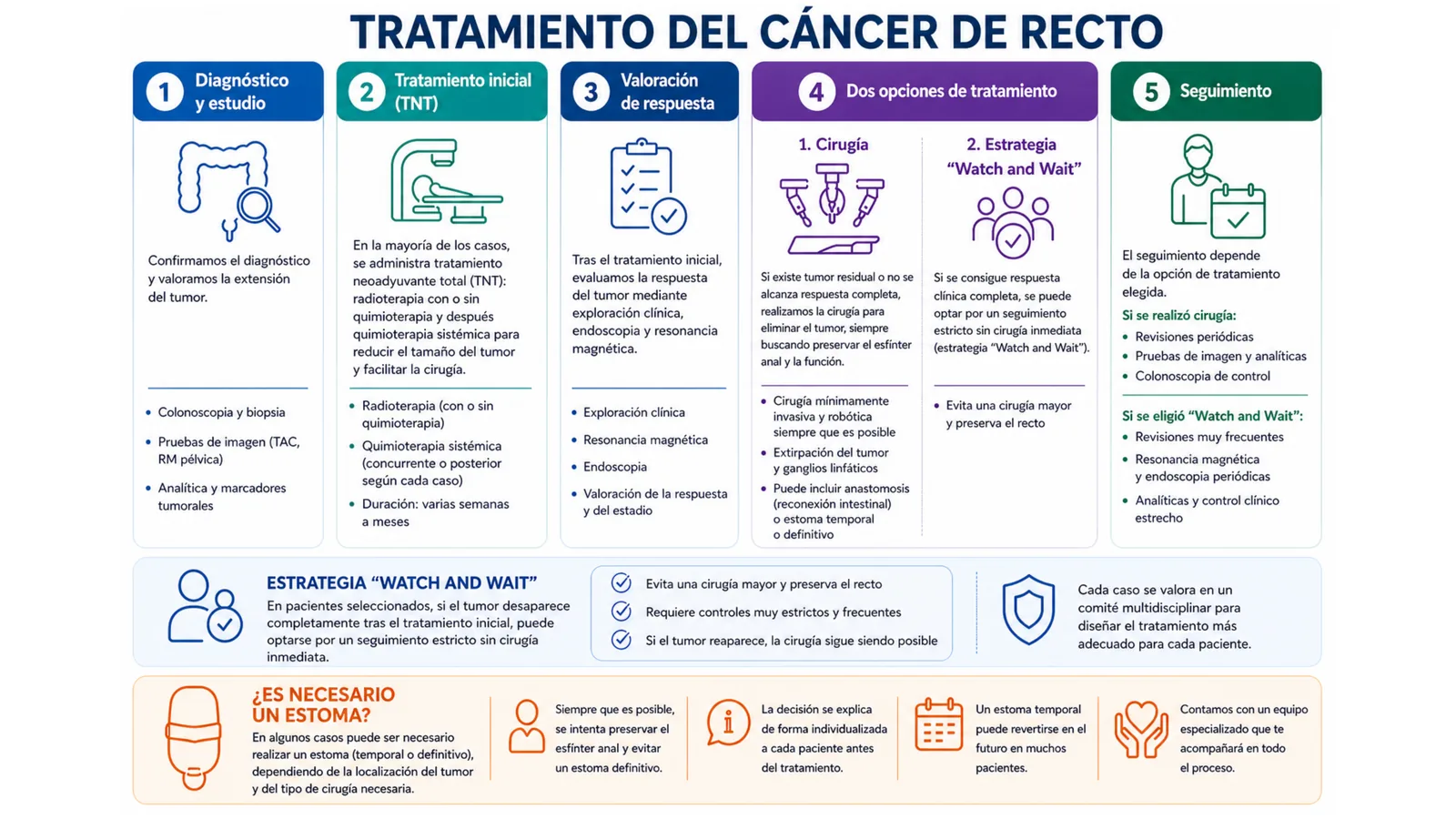
It is only considered in selected cases. The tumor must have responded completely to treatment and the tests must show no disease. The patient also has to be able to stick to strict follow-up, because check-ups are frequent and cannot be skipped.
The decision is made by a multidisciplinary board with experience in this strategy, made up of colorectal surgeons, oncologists, radiologists and gastroenterologists. Reading the MRI and endoscopy correctly after chemotherapy and/or radiotherapy is what makes selection safe, which is why the assessment should be done by a team that treats rectal cancer routinely.
The rectum and bowel function are kept, major surgery is avoided and so is the stoma. For many patients this means a better quality of life.
The main risk is that the tumor comes back during follow-up. That is why check-ups are so close: if it returns, it is detected early and operated on promptly.
In most cases surgery is still possible and effective. Whenever possible it is done robotically, also after radiotherapy.
Check-ups include clinical examination with digital rectal exam, rectoscopy (rigid or flexible), pelvic MRI, a CT scan of the chest, abdomen and pelvis, and tumor markers in the blood. As a guide, they are every 3 months for the first 2 years and every 6 months until 5 years are completed, although the schedule is adjusted to each patient. It is more intensive than the follow-up after conventional surgery, and it is what allows action in time if the tumor grows back.
If the tumor reappears in the rectum during that time, surgery is scheduled. Detecting it early allows salvage surgery with curative intent in a high percentage of cases. If it does not, the patient keeps their rectum.
Colorectal surgeons of the team at Hospital Memorial Publio Cordón.
Colorectal surgeon
View doctor: Dr. Patricia Tejedor
Colorectal surgeon
View doctor: Prof. Julio García AguilarChief of the Colorectal Service at Memorial Sloan Kettering Cancer Center, principal investigator of the OPRA trial on organ preservation and total neoadjuvant therapy (TNT) in rectal cancer.
No. The patient has already received radiotherapy and chemotherapy, and the tumor has disappeared with that treatment. What we do is adapt the treatment to preserve the rectum and quality of life, keeping oncological safety through frequent check-ups.
It is operated on. Because check-ups are frequent, regrowth is detected early, and in most cases surgery is still possible and effective.
As a guide, every 3 months for the first 2 years and every 6 months until 5 years are completed. They include clinical examination with digital rectal exam, rectoscopy, pelvic MRI, CT scan and tumor markers. It is more intensive than follow-up after conventional surgery.
It depends on how the tumor responds to the initial treatment. If the response is complete and the board considers it safe, watch and wait avoids surgery and the stoma with it. If tumor remains, surgery will be performed, always aiming to preserve the sphincter when possible.
Yes. If surgery is needed during follow-up, the robotic approach is preferred whenever possible, also after previous treatments. The robot gives more precision in the pelvis and helps preserve the nerves.
Yes. We review your tests and the report of the treatment you received and tell you whether watch and wait is an option in your case. You can do it in person in Madrid or through our online second opinion.
We operate in two private hospitals in Spain. The same medical team treats you in Madrid and in Barcelona, with the same surgical and oncological protocols.
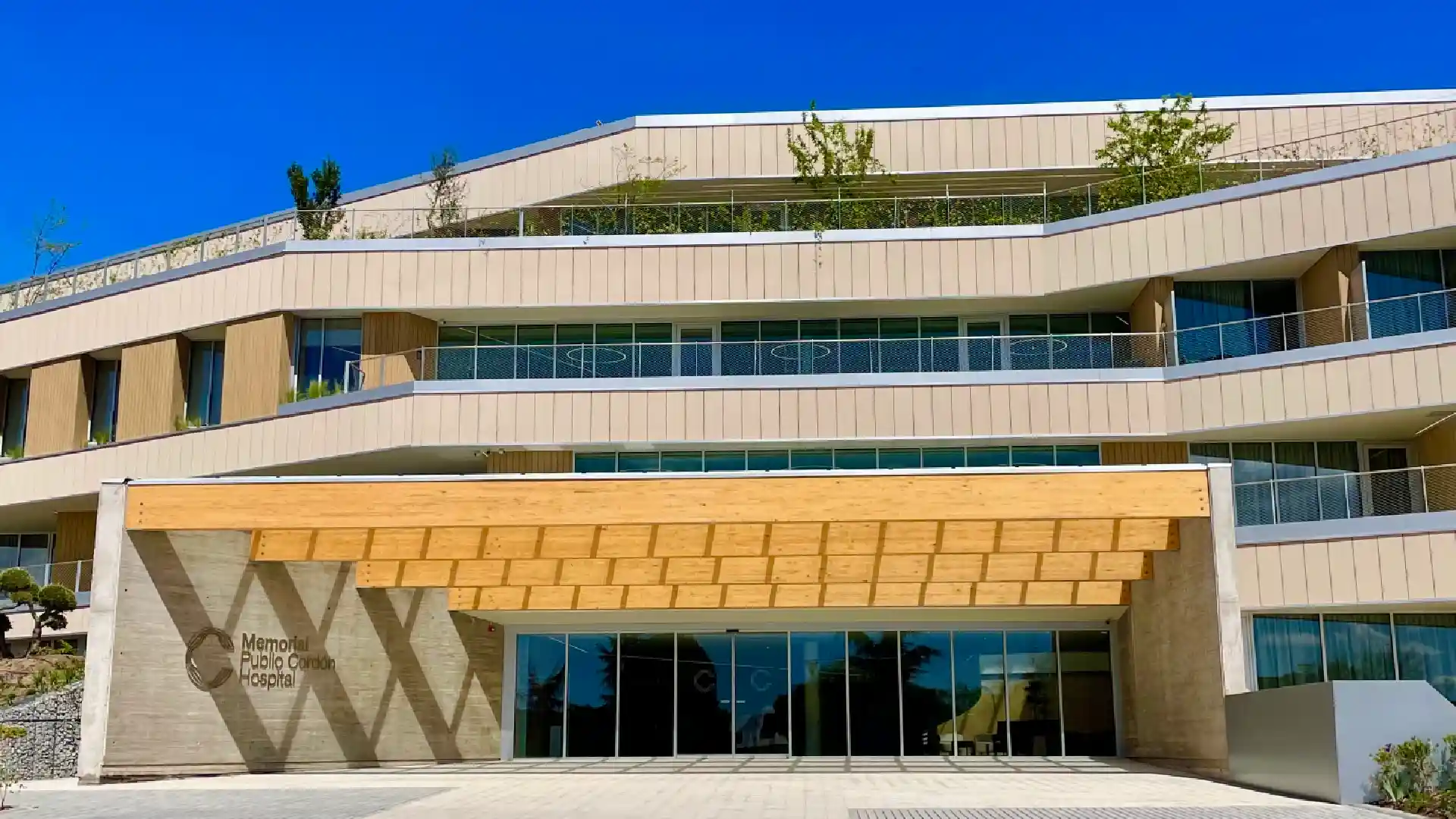
Private hospital in Pozuelo de Alarcón with a multidisciplinary team specialised in digestive surgical oncology.
View Memorial Publio Cordón Hospital
Private hospital in Barcelona where the team performs high-complexity surgical oncology.
View Centro Médico TeknonReal testimonies from patients treated by our team in high-complexity surgical oncology.
66-year-old English woman with advanced ovarian cancer and peritoneal metastases. Treated with cytoreduction + HIPEC, she is now disease-free.
Read the full case73-year-old patient with advanced cancer treated with chemotherapy and high-complexity surgical oncology, with good survival and quality of life.
Read the full caseA mistaken diagnosis of terminal colon cancer that a second opinion revealed to be pseudomyxoma peritonei, treatable with cytoreductive surgery and HIPEC.
Read the full caseDiagnosed with widespread peritoneal carcinomatosis and considered inoperable. After complete cytoreduction with HIPEC, today his is a story of survival.
Read the full caseWonderful surgical team, among the best out there. Dr. Torrent (expert in peritoneal carcinomatosis) is an exceptional surgeon and an even better person. His coordinator is super kind, fast and efficient. The personal care is excellent and so are the results. This is of vital importance for cancer patients.
In the public healthcare system they gave my father a maximum of one year to live. They only offered him chemo and no hope, said it was impossible, that nothing could be done. He had several tumors inside the peritoneal sac with metastases. A year and a half later he is clean, completely cured. His latest PET scan came back clean. We are very happy. Thanks to Dr. Torrent and his team. THANK YOU.
Excellent professionals, especially Dr. Torrent, attentive at all times to the patient (my wife), operated for peritoneal pseudomyxoma. They helped us with all our needs since we came from outside Barcelona. Thank you Elisabeth. We are very grateful to Quenet Torrent Institute, thank you for everything.
I am a 63-year-old patient. They detected adrenal gland cancer and told me there was nothing to be done. I sought a second opinion and they told me about the Quenet Torrent team, specialists in complex operations. Dr. Torrent, from the first moment, told me they could operate. They operated and removed a large tumor mass. I spent a week in the ICU and a month on the ward. Every day he came morning and evening, no matter Saturday or Sunday. Never throw in the towel. I am happy to have found these professionals who gave me my life back. Thank you.
Many thanks for your attention. Dr. Torrent always attentive, involved and decisive. The reception staff very pleasant and always offering the best option. 100% RECOMMENDED. THANK YOU.
Dr. Torrent helped me make the best decision at a difficult moment. I think he is a great professional and a person capable of accompanying you and putting himself in another's shoes. Thank you for everything.
I have peritoneal carcinomatosis. When I sent my diagnosis to every center, practically all of them agreed on palliative chemo with little survival time, since I had a very aggressive type of cell. Until we reached Dr. Quenet, Dr. Torrent and their team. I can only confirm what their CV announces: they are far ahead of the rest. They saved my life, because during the operation the harmful cells that everyone had diagnosed, and that were the reason nobody would operate on me, were not there. This intervention has become the best investment of my life.
The best decision of my life was finding this excellent team of surgeons who saved my husband's life. At a prestigious international clinic in Madrid he was given up for lost with advanced peritoneal carcinomatosis from appendiceal cancer, and thanks to them, the best professionals in this field, he was operated on very successfully. A perfect recovery with no complications, because they were on top of his progress at all times. They have a great quality: from the start they were very honest and close. I can only be deeply grateful; we went to buy time and thanks to them my husband got his life back.
Dr. Torrent is a brilliant surgeon and a very approachable and warm doctor, whose manner reveals all the qualities that make him a great person and professional: perseverance, innate curiosity and a desire to learn, humility, sincerity and empathy. Going through an operation is undoubtedly an intense experience, physically and emotionally, in which anxieties arise and you feel very vulnerable. All of that is normal, and as his former patient I can say that his care and professionalism throughout the process were absolutely exceptional. I felt very supported by him, with the confidence of knowing I was in the best hands. I will always be grateful to him. Moltes gràcies Dr. Torrent!
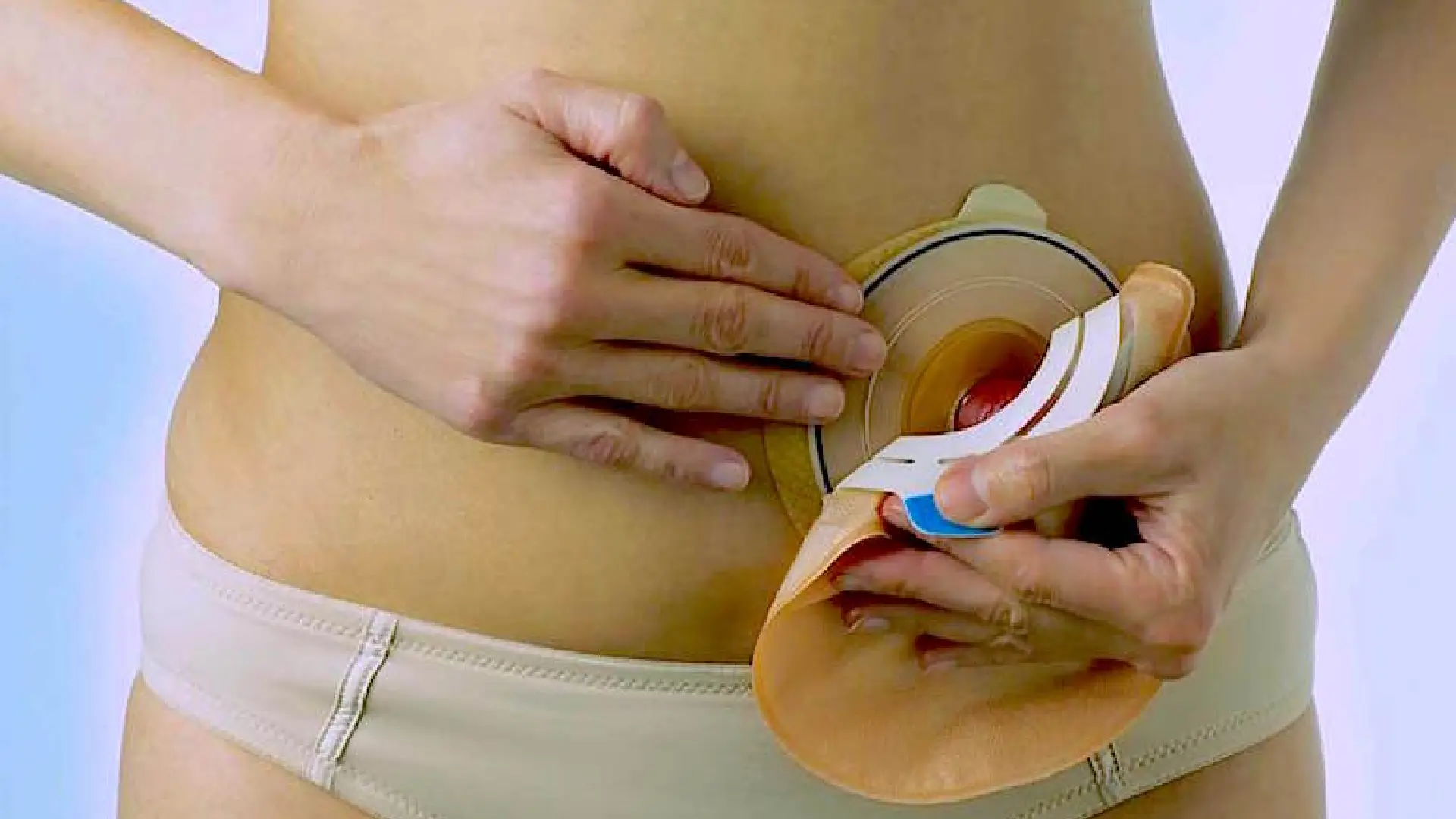
An ostomy is an opening in the abdomen through which stools or urine pass into a bag. The types, what living with one is like, how to care for it and when it can be avoided or closed.
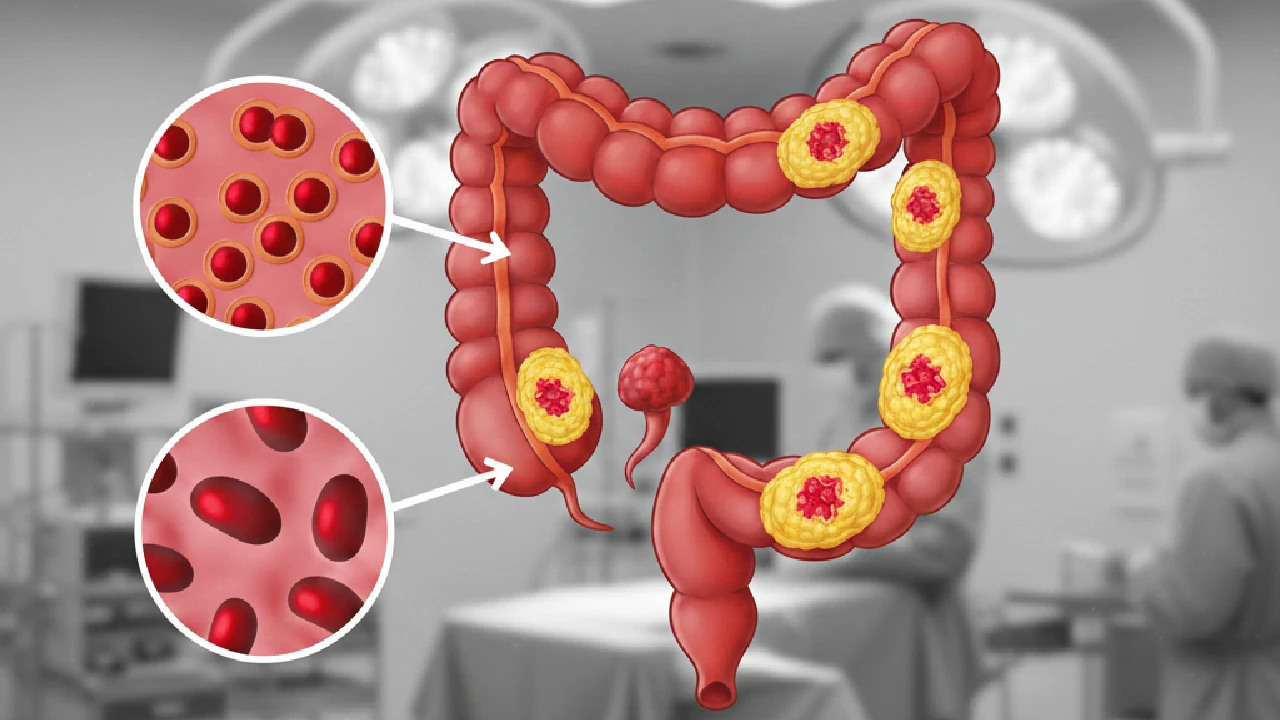
A complete guide to colon cancer: risk factors, warning symptoms, diagnostic methods and treatment options, including robotic surgery and chemotherapy.
Dr. Patricia Tejedor is first author of the SAGES clinical review on the management of colorectal cancer in the emergency setting, published in Surgical Endoscopy.
Complete the form and schedule your appointment to speak directly with the surgeon.