
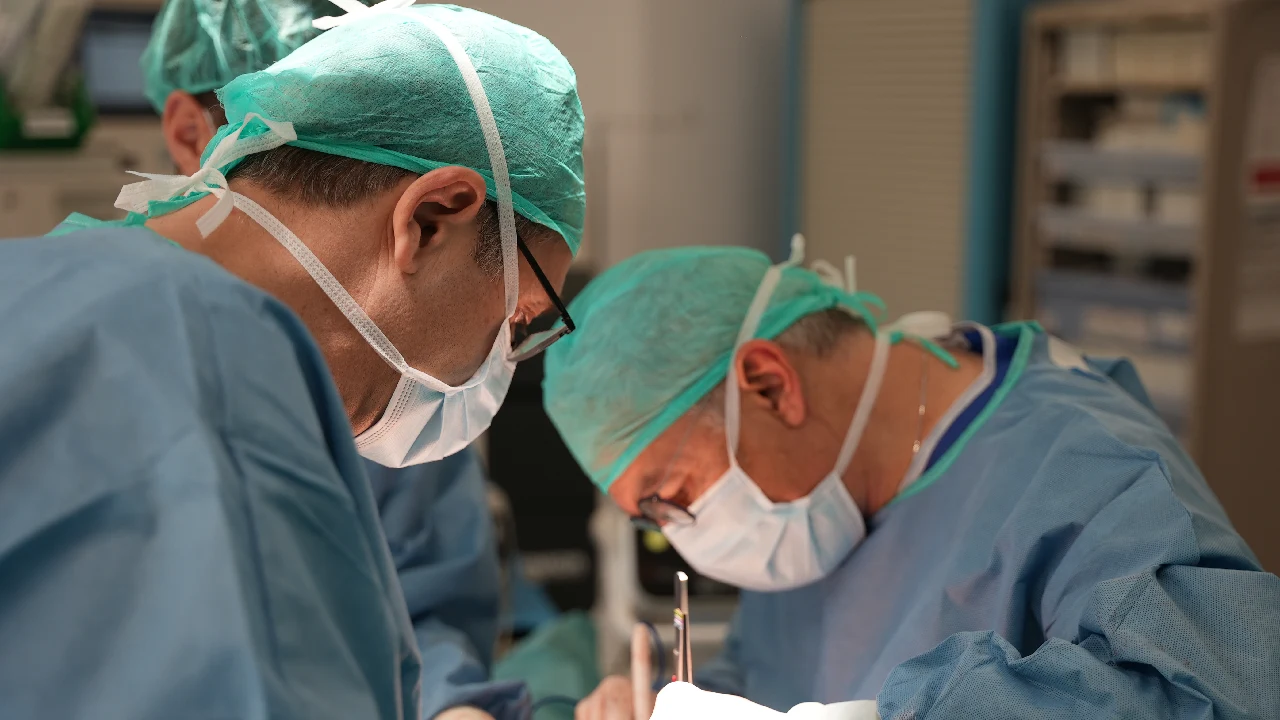
Cytoreductive surgery: the basis of treatment
Cytoreductive surgery combined with HIPEC (hyperthermic intraperitoneal chemotherapy) has changed the treatment of peritoneal carcinomatosis. In selected patients, a disease that used to be considered terminal can be cured.
At Quenet Torrent Institute we have performed more than 3,000 procedures with this technique and have published the results in scientific journals.
What is cytoreductive surgery?
Cytoreductive surgery is the complete resection of all visible tumour deposits in the peritoneal cavity. This can include:
• Peritonectomies: Resection of the affected peritoneum (parietal, diaphragmatic, pelvic)
• Omentectomy: Complete removal of the greater and lesser omentum
• Visceral resections: Removal of infiltrated organs (bowel, spleen, gallbladder, uterus, ovaries)
• Complex resections: Gastrectomies, colectomies, liver resections depending on extent
The goal is to achieve complete cytoreduction (CC-0), with no visible macroscopic residual tumour, which is the factor with the greatest influence on survival.
Combination with HIPEC: how they complement each other
After cytoreductive surgery, we deliver heated chemotherapy (41-43°C) directly into the abdominal cavity for 60-90 minutes. This eliminates residual microscopic tumour cells.
Advantages of HIPEC:
• A 10-100 times higher concentration of chemotherapy in the peritoneum than with intravenous administration
• Minimal systemic exposure (fewer side effects)
• Heat enhances the cytotoxic effect and tissue penetration
• It eliminates residual microscopic disease after cytoreduction
More information on the side effects of HIPEC.
Indications: which patients benefit?
Cytoreductive surgery + HIPEC is indicated in:
Carcinomatosis of colorectal origin: The most common scenario and the one with the best results. 5-year survival: 30-50%
Carcinomatosis of ovarian origin: As initial treatment in stage III-IV or in platinum-sensitive recurrences
Pseudomyxoma peritonei: Mucinous tumours of the appendix or ovary. Survival >60% at 10 years
Peritoneal mesothelioma: Median survival >5 years with surgery+HIPEC vs <1 year without treatment
Gastric carcinomatosis: In very selected cases. See the study on HIPEC in gastric carcinomatosis.
Preoperative assessment
Before surgery we carry out a complete multidisciplinary assessment:
Chest, abdominal and pelvic CT: Peritoneal carcinomatosis index (PCI), small bowel involvement, extra-abdominal disease
Tumour markers: CEA, CA19-9, CA125 depending on the primary tumour
PET-CT: In selected cases, to rule out hidden metastases
Diagnostic laparoscopy: To assess real resectability before a major laparotomy
Functional assessment: Cardiopulmonary, renal, nutritional. Nutrition carries a lot of weight in the preparation.
The surgery: step-by-step procedure
Duration: 6-12 hours depending on extent
1. Exploratory laparotomy: Xipho-pubic incision. Complete assessment of extent (definitive PCI)
2. Cytoreduction: Systematic resection of all implants and affected peritoneum. Visceral resections as needed
3. HIPEC: Temporary closure of the abdominal wall. Perfusion with heated chemotherapy (oxaliplatin, mitomycin, cisplatin depending on the tumour)
4. Reconstruction: Digestive anastomoses, stomas if needed, definitive closure
Results and survival
Our results at Quenet Torrent Institute:
• Complete cytoreduction rate (CC-0): 85-90%
• Perioperative mortality: <2%
• Major morbidity: 20-25%
• Median survival in colorectal carcinomatosis: 40-60 months
• 5-year survival: 30-50% depending on PCI and cytoreduction
These results are well above survival with palliative chemotherapy alone (12-18 months).
Prognostic factors
Complete cytoreduction (CC-0): The most important factor. CC-0 vs CC-2: a difference of >2 years in median survival
Low PCI (<20): Better prognosis than a high PCI
Small bowel involvement: A significant adverse factor
Primary tumour: Pseudomyxoma > colorectal > gastric in terms of survival
Centre experience: High-volume centres (>30 cases/year) have better results. That is why choosing the centre matters.
Postoperative recovery
We use an ERAS (Enhanced Recovery) protocol:
• ICU stay: 24-48h for monitoring
• Average hospital stay: 10-14 days
• Early start of oral feeding (day 3-4)
• Early mobilisation to prevent complications
• Pain control with multimodal analgesia
Are you a candidate for cytoreductive surgery + HIPEC? At Quenet Torrent Institute we assess every case in a multidisciplinary committee. Request a second opinion from our team.