Liver metastases do not always mean incurable disease. Specialized surgery can significantly improve the prognosis, with 5-year survival rates above 40% in selected cases.
More than 20,000 oncological operations and 30 years of experience
The Quenet Torrent Institute team has decades of international experience in high-complexity oncological surgery and publishes its results in scientific journals.
20,000+Oncological operations performed
500+Cytoreduction + HIPEC procedures
30+Years of international experience
2 sitesTeknon Barcelona · Memorial Publio Cordón Madrid
Clinical summary
Life expectancy with liver metastases improves substantially with surgical resection: published series of resected colorectal metastases report 5-year survival of 40-60%, compared with the 16% 5-year relative survival recorded for colorectal cancer at the distant stage as a whole (SEER, Colorectal cancer statistics 2026). At Quenet-Torrent Institute (Teknon Barcelona · Memorial Publio Cordón Madrid), the team of Dr. Quenet and Dr. Torrent, supervised by Prof. Panaro, reassesses cases considered unresectable using combined techniques.
What determines life expectancy with liver metastases?
Life expectancy with liver metastases depends on many factors: the organ where the primary tumor started, the number and size of the liver lesions, the presence of disease outside the liver and, above all, whether the patient can undergo surgery with curative intent.
Surgery is the only treatment with curative potential for liver metastases. Without surgery, first-line trials in metastatic colorectal cancer report median overall survival of around 24-30 months with current regimens (TRIBE trial, N Engl J Med 2014; ESMO guideline for metastatic colorectal cancer). With complete resection, published series put 5-year survival between 40% and 60% for metastases of colorectal origin.
An important point when reading these figures: median survival is the time it takes for half of the patients in a series to die, not the time a particular person will live. 5-year survival is the percentage of patients alive five years after diagnosis or surgery. Both describe groups, and they come from series with very different selection criteria.
Life expectancy with liver metastases without surgery
When surgery is not possible, the prognosis depends mainly on the response to systemic treatment.
Without cancer treatment
The historical reference series, from before modern chemotherapy, reported a median of 4.5 months in untreated synchronous liver metastases. It is a 1981 figure given for context, not a usual scenario today.
Bengtsson G, et al. Am J Surg. 1981;141(5):586-9.
With systemic chemotherapy
Current regimens reach median overall survival of around 24-30 months. In the TRIBE trial, FOLFOXIRI plus bevacizumab achieved a median of 29.8 months compared with 25.8 with FOLFIRI plus bevacizumab.
Loupakis F, et al. N Engl J Med. 2014;371(17):1609-18. ESMO guideline for metastatic colorectal cancer.
With local ablation (without surgery)
In small lesions and favorable locations, radiofrequency or microwave ablation can achieve prolonged local control. Guidelines consider it an alternative or complement when complete resection is not feasible, not a routine substitute for surgery.
ESMO guideline for metastatic colorectal cancer. NCCN Guidelines, Colon Cancer.
With immunotherapy (MSI-H cases)
In tumors with microsatellite instability (MSI-H/dMMR), the 5-year follow-up of the KEYNOTE-177 trial with pembrolizumab reported median overall survival of 77.5 months and 54.8% of patients alive at 5 years, compared with 36.7 months with chemotherapy.
Diaz LA, et al. KEYNOTE-177, 5-year follow-up. Ann Oncol. 2025.
Life expectancy with liver metastases with surgery
Surgical resection of liver metastases is the treatment that offers the highest long-term survival rates and even cure in selected cases.
Resected colorectal metastases
5-year survival of 40-60% in published series after complete resection. At 10 years, the study that defined the concept of cure reported 17-25% actual survivors, virtually all of them disease-free.
Tomlinson JS, et al. J Clin Oncol. 2007;25(29):4575-80. Systematic review of resection series, Br J Cancer. 2006.
Metastases from neuroendocrine tumors
5-year survival of 60-70% after resection in well-differentiated tumors (G1-G2), where the biology is more favorable. In high-grade tumors the results are clearly worse.
Series of liver resection in NETs in line with ENETS/NANETS criteria.
Breast metastases
This is the scenario with the widest variation between series: published series report 5-year survival ranging from 25% to 58%, with medians around 40%. The disease-free interval and the resection margin are the factors that weigh most.
Systematic review and meta-analysis of liver resection in metastatic breast cancer, The Surgeon. 2022.
Conversion strategies
In initially unresectable tumors, conversion chemotherapy can make them operable. The reference series reported 5-year survival of 33% after rescue surgery, with 12.5% of initially unresectable patients going on to have surgery.
Adam R, et al. Ann Surg. 2004;240(4):644-58.
Many cases considered unresectable can be operated on with high-complexity techniques such as ALPPS, two-stage surgery or portal vein embolization.
About these figures. All the data on this page come from published studies and clinical guidelines, referenced at the end. They describe groups of patients with specific selection criteria, not individual cases. None of these figures can be used to estimate a particular person's prognosis: that depends on the type of tumor, its extent, its molecular biology, the patient's general condition and the response to treatment, and only the medical team treating the case, with the tests in front of them, can assess it. This page is general information and does not replace a medical consultation.
Could this case be eligible for surgery?
Send the case and our surgical team will review whether it can be assessed for surgery. First contact within 24-48h.
Prognosis
Factors that determine life expectancy with liver metastases
Not all liver metastases have the same prognosis. These are the main factors that affect it.
Origin of the primary tumor
Colorectal metastases have a better surgical prognosis than those from the pancreas, stomach or lung.
Number and size of lesions
Fewer and smaller lesions mean a greater chance of complete resection and a better prognosis.
Disease outside the liver
Metastases outside the liver reduce the chances of surgical cure, although they are not always an absolute contraindication.
Disease-free interval
A long time between the primary tumor and the appearance of metastases is associated with a better prognosis.
Response to chemotherapy
A good response to prior systemic treatment is an independent favorable prognostic factor.
Condition of the remaining liver
Enough functional liver tissue must remain after resection to avoid postoperative liver failure.
Can life expectancy with liver metastases improve?
Yes. Progress in surgical techniques and multimodal treatments has significantly improved the prognosis of patients with liver metastases over the last two decades.
Strategies such as two-stage surgery, the ALPPS technique, preoperative portal vein embolization or combining resection with ablation have made it possible to operate on patients who were previously considered unresectable, widening the possibilities of long survival.
Assessment at a specialized, high-volume center carries a lot of weight: access to complex techniques and a multidisciplinary team can turn palliative treatment into treatment with curative intent.
Why Quenet-Torrent Institute?
Specialists in complex liver metastasis cases
Many patients come to Quenet-Torrent Institute after being ruled out for surgery at other centers. Our experience allows us to reassess each case from a different perspective.
Reassessment of unresectable cases
We review cases considered inoperable, looking for surgical strategies that allow resection with curative intent.
High-complexity techniques
ALPPS, two-stage surgery, portal vein embolization, combined ablation and complex laparoscopic or robotic hepatectomies.
Multidisciplinary team
Surgeons, oncologists, interventional radiologists and nuclear medicine specialists work together for each patient.
More than 20,000 operations
This is the surgical experience the team has accumulated, including in high-complexity cases.
Frequently asked questions about life expectancy with liver metastases
The most common questions about prognosis and survival with liver metastases.
How long can you live with liver metastases?
It depends on the treatment received. With modern chemotherapy and no surgery, trials report medians of 24 to 30 months in metastatic colorectal cancer. After complete liver resection, published series report five-year survival of 40-60%, and between 17% and 25% survivors at ten years. These are data from selected groups, not an individual forecast.
Can liver metastases be cured?
Yes, in selected cases. The study that defined cure in colorectal liver metastases followed 612 operated patients: 102 were still alive at 10 years and 97% of them were disease-free, which puts the real cure rate between 17% and 25% (Tomlinson, J Clin Oncol 2007).
Which liver metastases have the best prognosis?
Those of colorectal origin and those from neuroendocrine tumors respond best to surgery, with long survival and even cure. Those from the pancreas, stomach or lung have a worse prognosis and the indication for surgery is much more restrictive. The origin of the primary tumor matters as much as the number of lesions.
Does chemotherapy improve life expectancy?
Yes, significantly. Modern regimens have doubled survival compared with previous decades. In addition, in some patients they shrink the metastases enough to make them operable, which is known as conversion chemotherapy: the aim shifts from controlling the disease to being able to remove it with curative intent.
What if I am told the metastases are inoperable?
It is worth asking for a second opinion at a specialized center. Many "inoperable" cases can be treated with high-complexity techniques such as ALPPS, two-stage surgery, portal vein embolization or a combination of resection and ablation, which make initially rejected cases operable.
Is ablation as effective as surgery?
In small lesions, under 2 or 3 centimeters and in favorable locations, the results can be comparable. In other situations, complete surgical resection offers better local control rates. Both techniques are often combined in the same operation to preserve more healthy liver.
Can I be operated on again if the metastases come back?
Yes, in many cases. A second liver resection for recurrence is a valid strategy and offers results similar to the first operation in selected patients. What is assessed is whether the recurrence is resectable, whether enough healthy liver will remain and whether the patient's general condition allows it.
Where are liver metastases treated in Spain?
At centers with proven experience in high-complexity oncological surgery and a multidisciplinary board. Quenet Torrent Institute, based in Barcelona with a clinical unit at Hospital Memorial Publio Cordón in Madrid, has performed more than 3,000 procedures and publishes its results in international journals.
What is the best clinic for liver metastases surgery?
There is no single best clinic, but there are objective criteria for comparing centers. There are five: annual surgical volume, complete resection rate, the team's scientific publications, an established multidisciplinary board and availability of high-complexity techniques. At Quenet Torrent Institute we meet those criteria and treat patients from all over Spain and Latin America.
How do I ask for a second opinion on liver metastases?
By sending us your medical reports, imaging studies (CT, MRI or PET-CT) and the pathology report if you have it. The team assesses the case at the multidisciplinary board and gives you a written report with the recommended plan within 24 to 72 hours. It is best to ask before the first operation: its quality affects the whole prognosis.
References
Sources of the survival data
Every figure on this page comes from one of these sources. They are listed so that any patient or professional can check them.
Tomlinson JS, Jarnagin WR, DeMatteo RP, et al. Actual 10-year survival after resection of colorectal liver metastases defines cure. J Clin Oncol. 2007;25(29):4575-4580. PubMed 17925551
Adam R, Delvart V, Pascal G, et al. Rescue surgery for unresectable colorectal liver metastases downstaged by chemotherapy: a model to predict long-term survival. Ann Surg. 2004;240(4):644-658. PubMed 15383792
Loupakis F, Cremolini C, Masi G, et al. Initial therapy with FOLFOXIRI and bevacizumab for metastatic colorectal cancer (TRIBE trial). N Engl J Med. 2014;371(17):1609-1618. NEJM
Diaz LA, Shiu KK, Kim TW, et al. Pembrolizumab versus chemotherapy in MSI-H/dMMR metastatic colorectal cancer: 5-year follow-up from KEYNOTE-177. Ann Oncol. 2025. Annals of Oncology
Bengtsson G, Carlsson G, Hafström L, Jönsson PE. Natural history of patients with untreated liver metastases from colorectal cancer. Am J Surg. 1981;141(5):586-589. PubMed 7223955
Simmonds PC, Primrose JN, Colquitt JL, et al. Surgical resection of hepatic metastases from colorectal cancer: a systematic review of published studies. Br J Cancer. 2006;94(7):982-999. British Journal of Cancer
Siegel RL, Wagle NS, Jemal A, et al. Colorectal cancer statistics, 2026. CA Cancer J Clin. 2026. Relative survival data by stage from the SEER registry. CA: A Cancer Journal for Clinicians
Cervantes A, Martinelli E, et al. Metastatic colorectal cancer: ESMO Clinical Practice Guideline for diagnosis, treatment and follow-up. Ann Oncol. ESMO guideline
National Comprehensive Cancer Network. NCCN Clinical Practice Guidelines in Oncology: Colon Cancer. NCCN
Last medical review of the content: July 30, 2026, by Prof. Fabrizio Panaro, hepatobiliary surgeon.
Where to treat liver metastases?
We operate in two private hospitals in Spain. The same medical team treats you in Madrid and in Barcelona, with the same surgical and oncological protocols.
Madrid
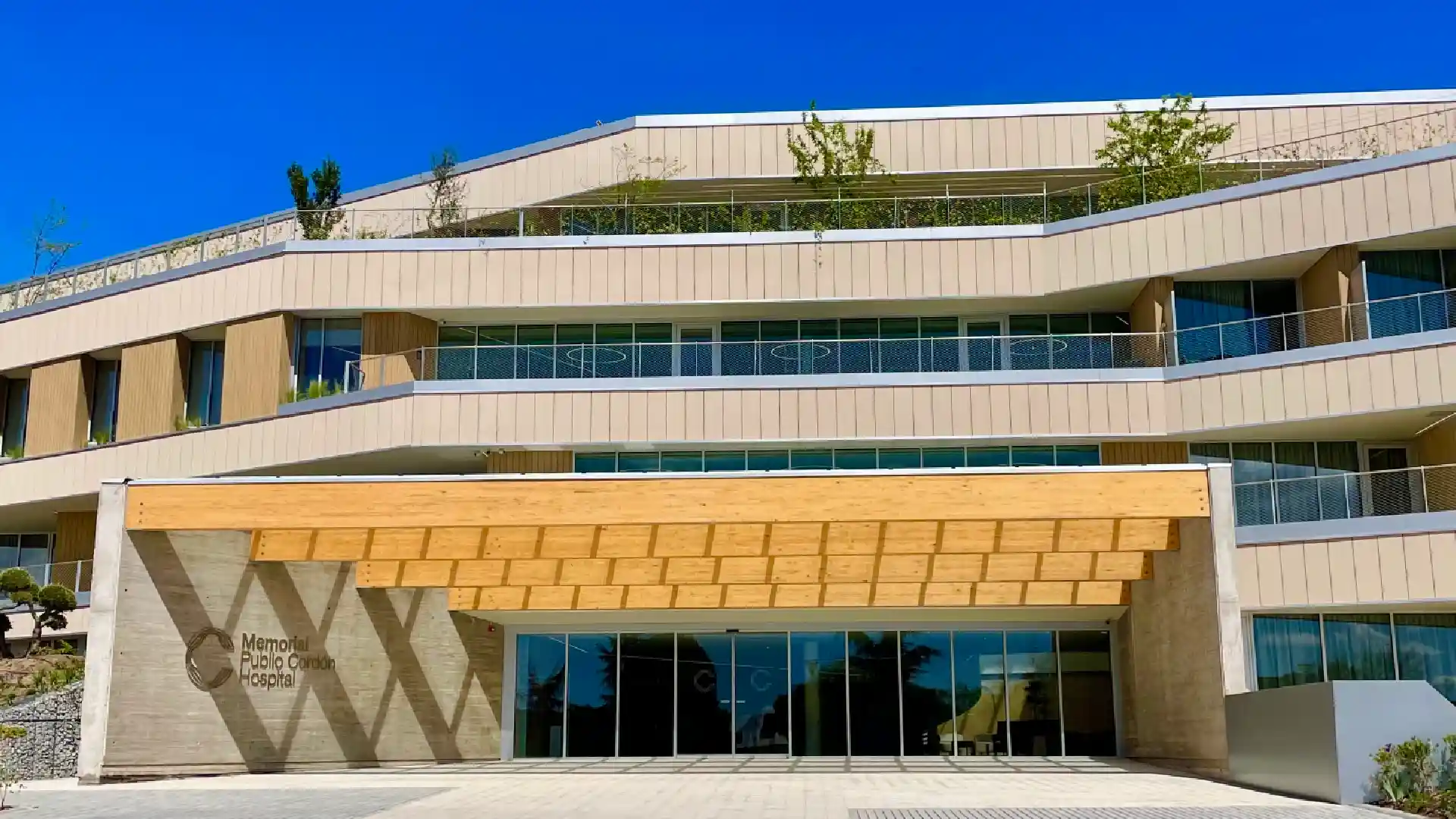
Memorial Publio Cordón Hospital
Private hospital in Pozuelo de Alarcón with a multidisciplinary team specialised in digestive surgical oncology.
Paseo de la Casa de Campo, 528223 Pozuelo de Alarcón, Madrid
A mistaken diagnosis of terminal colon cancer that a second opinion revealed to be pseudomyxoma peritonei, treatable with cytoreductive surgery and HIPEC.
Diagnosed with widespread peritoneal carcinomatosis and considered inoperable. After complete cytoreduction with HIPEC, today his is a story of survival.
Wonderful surgical team, among the best out there. Dr. Torrent (expert in peritoneal carcinomatosis) is an exceptional surgeon and an even better person. His coordinator is super kind, fast and efficient. The personal care is excellent and so are the results. This is of vital importance for cancer patients.
K
Kanijo Sánchez
5 months ago
5/5
In the public healthcare system they gave my father a maximum of one year to live. They only offered him chemo and no hope, said it was impossible, that nothing could be done. He had several tumors inside the peritoneal sac with metastases. A year and a half later he is clean, completely cured. His latest PET scan came back clean. We are very happy. Thanks to Dr. Torrent and his team. THANK YOU.
M
Manuel S.D.
A year ago
5/5
Excellent professionals, especially Dr. Torrent, attentive at all times to the patient (my wife), operated for peritoneal pseudomyxoma. They helped us with all our needs since we came from outside Barcelona. Thank you Elisabeth. We are very grateful to Quenet Torrent Institute, thank you for everything.
P
Pilar Garcés
2 years ago
5/5
I am a 63-year-old patient. They detected adrenal gland cancer and told me there was nothing to be done. I sought a second opinion and they told me about the Quenet Torrent team, specialists in complex operations. Dr. Torrent, from the first moment, told me they could operate. They operated and removed a large tumor mass. I spent a week in the ICU and a month on the ward. Every day he came morning and evening, no matter Saturday or Sunday. Never throw in the towel. I am happy to have found these professionals who gave me my life back. Thank you.
I
Imma Rondán
3 years ago
5/5
Many thanks for your attention. Dr. Torrent always attentive, involved and decisive. The reception staff very pleasant and always offering the best option. 100% RECOMMENDED. THANK YOU.
M
Mª Cristina Domínguez
5 years ago
5/5
Dr. Torrent helped me make the best decision at a difficult moment. I think he is a great professional and a person capable of accompanying you and putting himself in another's shoes. Thank you for everything.
F
Francisco García
6 years ago
5/5
I have peritoneal carcinomatosis. When I sent my diagnosis to every center, practically all of them agreed on palliative chemo with little survival time, since I had a very aggressive type of cell. Until we reached Dr. Quenet, Dr. Torrent and their team. I can only confirm what their CV announces: they are far ahead of the rest. They saved my life, because during the operation the harmful cells that everyone had diagnosed, and that were the reason nobody would operate on me, were not there. This intervention has become the best investment of my life.
M
Mara Reboredo
6 years ago
5/5
The best decision of my life was finding this excellent team of surgeons who saved my husband's life. At a prestigious international clinic in Madrid he was given up for lost with advanced peritoneal carcinomatosis from appendiceal cancer, and thanks to them, the best professionals in this field, he was operated on very successfully. A perfect recovery with no complications, because they were on top of his progress at all times. They have a great quality: from the start they were very honest and close. I can only be deeply grateful; we went to buy time and thanks to them my husband got his life back.
E
Elisenda Br.
7 years ago
5/5
Dr. Torrent is a brilliant surgeon and a very approachable and warm doctor, whose manner reveals all the qualities that make him a great person and professional: perseverance, innate curiosity and a desire to learn, humility, sincerity and empathy. Going through an operation is undoubtedly an intense experience, physically and emotionally, in which anxieties arise and you feel very vulnerable. All of that is normal, and as his former patient I can say that his care and professionalism throughout the process were absolutely exceptional. I felt very supported by him, with the confidence of knowing I was in the best hands. I will always be grateful to him. Moltes gràcies Dr. Torrent!
Can you live with (and even be cured of) liver metastases?
When liver metastases are diagnosed, the first question is: can you live with this disease? The answer is yes, and in selected cases a cure is possible.
Hepatic Arterial Infusion (HAI): from unresectable liver metastases to surgery
Dr. François Quenet takes part in a phase II trial published in JCO 2026 on hepatic arterial infusion (HAI) chemotherapy after surgery for colorectal liver metastases. We review the current indications for HAI.
Read more
Could this case be eligible for surgery?
Send the case and our surgical team will review whether it can be assessed for surgery. First contact within 24-48h.