
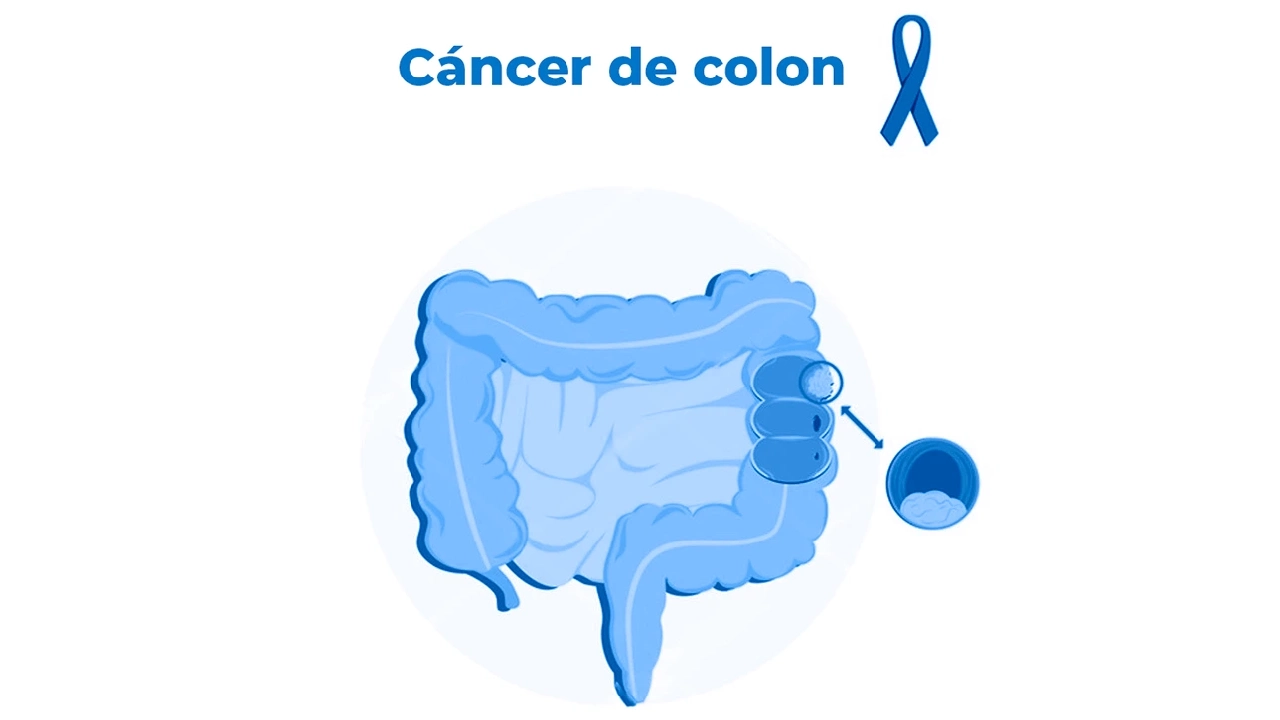
Colon cancer can largely be prevented
Colon cancer is one of the few cancers that can be effectively prevented through early detection and lifestyle changes. With the right strategies, we can reduce the risk by 50% or more.
More information on what colon cancer is.
Primary prevention: reduce your risk
Healthy diet:
• Increase fiber: Eating 25-30g of fiber a day (whole grains, fruit, vegetables, legumes) reduces the risk by 40%
• Reduce red meat: Limit it to <300g/week. Each 100g a day increases the risk by 17%
• Avoid processed meats: Cold cuts, sausages, bacon. Classified as carcinogenic by the WHO
• Increase calcium and vitamin D: Dairy products, oily fish, moderate sun exposure
• Folic acid: Green leafy vegetables, legumes, fortified cereals
Regular physical activity:
Moderate-to-vigorous exercise for 150 minutes/week reduces the risk by 20-30%. Brisk walking, running, cycling, swimming.
Maintain a healthy weight:
Obesity increases the risk by 30-70%. Keep your BMI <25 kg/m²
Limit alcohol:
Moderate-to-high consumption (>2 drinks/day) increases the risk by 20%. Limit it or avoid it completely
Don't smoke:
Smoking increases the risk by 20% and worsens the prognosis if you develop cancer
Secondary prevention: screening and early detection
Population screening is the most effective strategy for reducing mortality:
Fecal occult blood test (FOBT):
• Who? Everyone aged 50-69 with no symptoms and no family history
• How often? Every 2 years
• Advantage: Non-invasive, simple, included in public screening programs
• If positive: Diagnostic colonoscopy (10% of positives have polyps or cancer)
Preventive colonoscopy:
• Who? People with increased risk factors
• Frequency: Every 10 years if normal, more often if there are polyps
• Advantages: Shows the whole colon, allows polyps to be removed (real prevention), sensitivity >95%
• Procedure: Under sedation, painless, outpatient
Special indications for colonoscopy:
• First-degree family history: Start at 40, or 10 years before the youngest case
• Hereditary syndromes (Lynch, polyposis): Start at 20-25, every 1-2 years
• Inflammatory bowel disease: Colonoscopy every 1-2 years after 8-10 years of disease
Warning symptoms: when to seek urgent care
See a doctor immediately if you have:
• Blood in the stool (red or black)
• A persistent change in bowel habits (>4 weeks)
• Persistent abdominal pain
• Unexplained weight loss
• Iron-deficiency anemia with no cause
More on what we know about colon cancer.
Chemoprevention: preventive medicines
Aspirin (ASA): In people at high cardiovascular risk, low doses (75-100mg/day) reduce the risk of colorectal cancer by 30-40% after 5-10 years of use. Consult your doctor (risk of bleeding)
Nonsteroidal anti-inflammatory drugs (NSAIDs): A proven protective effect, but side effects limit their routine preventive use
Polyps: the step before cancer
95% of colon cancers develop from benign adenomatous polyps. This process takes 10-15 years, which leaves time to prevent it:
Adenoma-carcinoma sequence:
Normal mucosa – Small polyp (<1cm) – Large polyp (>1cm) – Dysplasia – Invasive cancer
Why polypectomy matters:
Removing polyps during colonoscopy reduces the incidence of cancer by 76-90%. That is why colonoscopy, as well as detecting cancer, prevents it
Genetic factors and counseling
5-10% of colorectal cancers are hereditary:
Lynch syndrome: 3-5% of cases. Mutations in repair genes (MLH1, MSH2, MSH6, PMS2). Lifetime risk 50-80%
Familial adenomatous polyposis (FAP): APC mutation. Hundreds to thousands of polyps. 100% risk if untreated
When to suspect a hereditary syndrome:
• Colorectal cancer <50 years
• Several affected family members
• Multiple polyps (>10)
• Multiple cancers (colon + endometrium, ovary, etc.)
If you meet the criteria: genetic counseling and genetic testing for the family
Impact of screening: the scientific evidence
Population screening programs reduce:
• Mortality: 30-50% in the population that takes part
• Incidence: 20-30% (real prevention by removing polyps)
• Advanced cases: More than 60% of cases detected through screening are stage I-II, vs 40% when diagnosed because of symptoms
Do you need a preventive colonoscopy? At Quenet Torrent Institute we perform diagnostic and therapeutic colonoscopies under conscious sedation, without discomfort, as an outpatient procedure. If you have a family history or risk factors, request an appointment with our specialists.
Frequently asked questions
The most common questions answered with concrete data.
Can colon cancer really be prevented?
Yes. Colon cancer is one of the few cancers that can be effectively prevented through early detection and lifestyle changes. With the right strategies, the risk can be reduced by 50% or more. Removing polyps during colonoscopy prevents 76-90% of cancers.
How much fiber should I eat each day to reduce the risk?
Eating 25-30 grams of fiber a day from whole grains, fruit, vegetables and legumes reduces the risk of colon cancer by up to 40%. Fiber speeds up bowel transit and shortens the time carcinogenic substances are in contact with the lining of the colon.
How much red meat is safe to eat?
The usual recommendation is to limit red meat to less than 300 g per week. Each additional 100 g eaten daily increases the risk by 17%. Processed meats (cold cuts, sausages, bacon) are classified as carcinogenic by the WHO and should be avoided as much as possible.
At what age should I start screening if I have no family history?
With no family history and no symptoms, the recommended screening is a fecal occult blood test every 2 years from the age of 50. If it is positive, a diagnostic colonoscopy is performed. About 10% of positives have polyps or cancer.
When should I start screening earlier because of family history?
With a first-degree relative with colorectal cancer, screening should start at 40, or 10 years before the youngest case in the family, with colonoscopy. In hereditary syndromes such as Lynch syndrome or familial adenomatous polyposis, screening can start at 20-25 with colonoscopy every 1-2 years.
Does a preventive colonoscopy hurt or have risks?
Colonoscopy is performed under conscious sedation and is painless for the patient. It is an outpatient procedure and does not require a hospital stay. Its sensitivity for detecting polyps is above 95%. The risk of complications (perforation or bleeding) is below 0.1% in expert hands.
How much does physical exercise reduce the risk?
Moderate-to-vigorous exercise for at least 150 minutes a week reduces the risk of colon cancer by 20% to 30%. Brisk walking, running, cycling or swimming are effective options. Obesity, on the other hand, increases the risk by 30% to 70%.
What are polyps and why should they be removed?
Adenomatous polyps are benign lesions that can become malignant in a process that takes 10-15 years. 95% of colon cancers start from them. Removing them during colonoscopy interrupts that progression and actually prevents cancer, rather than just detecting it.
Do tobacco and alcohol affect the risk of colon cancer?
Yes. Smoking increases the risk by 20% and worsens the prognosis if the disease develops. Drinking more than 2 alcoholic drinks a day increases the risk by another 20%. Reducing or eliminating both habits is one of the prevention strategies with the most scientific support.
Which symptoms should make me seek urgent care?
Seek urgent care if you have blood in the stool (red or black), a persistent change in bowel habits for more than 4 weeks, chronic abdominal pain, unexplained weight loss or iron-deficiency anemia with no apparent cause. The earlier it is diagnosed, the better the prognosis.
What is Lynch syndrome and what surveillance does it require?
Lynch syndrome is the most common hereditary cause of colorectal cancer, responsible for 3-5% of cases. It is caused by mutations in DNA repair genes (MLH1, MSH2, MSH6, PMS2) and carries a lifetime risk of 50-80%. It requires colonoscopy every 1-2 years from the age of 20-25 and genetic counseling for the family.