
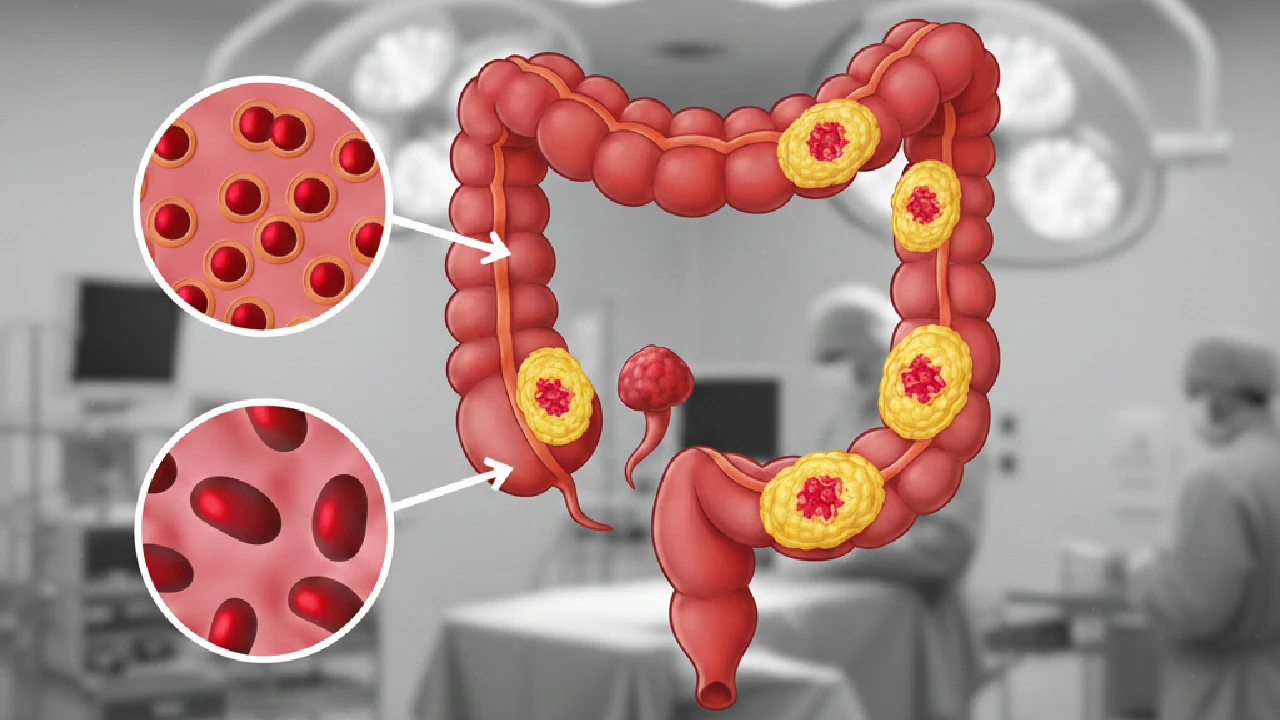
What is colon cancer?
Colon cancer is a malignant tumour that starts in the large intestine (colon) or in the rectum. It is the third most common cancer in Spain, with more than 40,000 new cases a year.
Most colon cancers develop from benign adenomatous polyps that can become malignant over time. This process usually takes 10-15 years, which makes early detection through screening possible.
Risk factors
• Age: Risk increases after the age of 50
• Family history: Having first-degree relatives with colorectal cancer doubles the risk
• Genetic syndromes: Familial adenomatous polyposis (FAP), Lynch syndrome
• Inflammatory bowel disease: Long-standing ulcerative colitis or Crohn's disease
• Lifestyle: Diet high in red and processed meat, obesity, physical inactivity, smoking, alcohol
Warning symptoms
• Change in bowel habits: Persistent diarrhoea or constipation
• Blood in the stool: Visible (rectal bleeding) or hidden (detectable only by testing)
• Chronic abdominal pain or frequent cramps
• Feeling of incomplete evacuation
• Unexplained weight loss and fatigue
• Iron-deficiency anaemia with no apparent cause
Diagnosis
Colonoscopy: The gold-standard test. It shows the whole colon and allows biopsies to be taken and polyps to be removed. It is done under sedation and is painless.
Chest and abdominal CT: For staging and to assess how far the disease has spread.
CEA (carcinoembryonic antigen): A tumour marker useful for follow-up.
Rectal MRI: In rectal tumours, to assess local invasion and plan treatment.
Treatment
Surgery: The main treatment. At Quenet Torrent Institute we perform colectomies using robotic surgery and laparoscopy, with faster recovery and fewer complications.
Types of surgery by location: right hemicolectomy, left hemicolectomy, sigmoidectomy, anterior resection of the rectum, abdominoperineal resection.
Adjuvant chemotherapy: After surgery in stage III and some high-risk stage II cases. FOLFOX or CAPOX regimens for 6 months.
Radiotherapy: Mainly in rectal cancer, before (neoadjuvant) or after surgery.
Targeted therapies: Bevacizumab, cetuximab, panitumumab in metastatic disease, depending on mutation status (RAS, BRAF).
Prevention and screening
Population screening: Faecal occult blood test every 2 years from the age of 50. If positive, colonoscopy.
Preventive colonoscopy: From the age of 45-50, or earlier if there is a family history.
Healthy lifestyle: A diet high in fibre, fruit and vegetables, regular exercise, and avoiding obesity, tobacco and alcohol.
Do you suspect colon cancer? The earlier it is diagnosed, the more treatment options there are. At Quenet Torrent Institute we make the diagnosis quickly and operate with robotic surgery. Request an appointment with our specialists.
Frequently asked questions
The most common questions answered with concrete data.
What is colon cancer?
Colon cancer is a malignant tumour that starts in the large intestine or in the rectum. It is the third most common cancer in Spain, with more than 40,000 new cases a year. Most develop from benign adenomatous polyps in a process that takes 10-15 years, which makes early detection possible.
What are the warning symptoms of colon cancer?
Symptoms that call for a consultation include blood in the stool (visible or hidden), a persistent change in bowel habits, chronic abdominal pain, a feeling of incomplete evacuation, unexplained weight loss and iron-deficiency anaemia with no apparent cause. Having them does not always mean cancer, but they need medical evaluation.
At what age should I start screening?
Population screening with a faecal occult blood test is recommended every 2 years from the age of 50 in people with no family history and no symptoms. If you have first-degree relatives with colorectal cancer, screening starts earlier, at 40 or 10 years before the youngest case in the family.
How is colon cancer diagnosed?
Colonoscopy is the reference test: it shows the whole colon and allows biopsies to be taken and polyps to be removed, under sedation and without pain. It is complemented by chest and abdominal CT for staging, the tumour marker CEA for follow-up and, in rectal tumours, MRI to plan treatment.
What are the stages of colon cancer and what is the survival for each?
Stage I has a 5-year survival above 90%. Stage III reaches 60-70%, compared with 30-40% twenty years ago. Stage IV with resectable metastases reaches 30-50% at 5 years. Overall survival is above 65%, compared with 50% three decades ago.
What types of surgery are there for colon cancer?
The main surgical treatment includes right or left hemicolectomy, sigmoidectomy, anterior resection of the rectum and abdominoperineal resection, depending on where the tumour is. These operations are performed with robotic or laparoscopic surgery, which allows faster recovery and fewer complications.
What is adjuvant chemotherapy and when is it used?
Adjuvant chemotherapy is given after surgery in stage III and in some high-risk stage II cases. The most common regimens are FOLFOX or CAPOX for 6 months. Its aim is to eliminate any remaining tumour cells and reduce the risk of recurrence.
Is radiotherapy part of colon cancer treatment?
Radiotherapy is used mainly in rectal cancer, either before surgery (neoadjuvant) to shrink the tumour, or after surgery in selected cases. In colon cancer itself it is used less often.
Which risk factors increase the likelihood of developing colon cancer?
The main factors are age over 50, a first-degree family history of colorectal cancer (which doubles the risk), hereditary syndromes such as familial adenomatous polyposis or Lynch syndrome, long-standing inflammatory bowel disease, and lifestyle habits such as a diet high in red and processed meat, obesity, physical inactivity, tobacco and alcohol.
Is it worth getting a second opinion after a colon cancer diagnosis?
Yes. A second opinion from a team with specific experience in colorectal surgery can confirm the diagnosis, review the stage and propose treatment options, such as robotic surgery or other techniques, that are not always available at every centre. It can be requested with no commitment before starting any treatment.
Can colon cancer be prevented?
Yes. With proper screening and lifestyle changes the risk can be reduced by up to 50%. Polypectomy during colonoscopy prevents 76-90% of cancers. A diet high in fibre (25-30 g/day), regular exercise and avoiding tobacco and excess alcohol are the measures best supported by the evidence.
What is robotic surgery and what advantages does it offer in colon cancer?
Robotic surgery allows the operation to be performed through very small incisions, with more precision and control of movement than conventional laparoscopy. The advantages include less postoperative pain, less bleeding, shorter hospital stays and faster recovery, with the same oncological quality as open surgery.