
30+ years of experience
500+ CRS+HIPEC procedures
International multidisciplinary committee

Quenet Torrent Institute invests in augmented reality in live surgery

10/25/2024 · Dr. Juan José Torrent

Quenet Torrent Institute invests in augmented reality in live surgery

Augmented reality in oncological surgery

At Quenet Torrent Institute we use augmented reality (AR) in the operating theatre to plan and guide complex oncological resections.

What surgical augmented reality is

A technology that overlays digital information (3D CT/MRI images, vascular structures, tumour boundaries) on the real surgical field in real time, guiding the surgeon with greater precision.

Applications in oncological surgery

• Preoperative planning: 3D reconstruction of the tumour and its relationship with vital structures

• Intraoperative navigation: Real-time visualisation of the tumour, vessels and lymph nodes

• Liver resections: Identifies liver segments, blood supply and resection limits

• Retroperitoneal sarcomas: Locates major vessels for safe vascular resections

• Surgical training: Training residents with virtual cases

Advantages

• Greater precision: More exact resections, optimised oncological margins

• Less bleeding: Precise identification of vessels

• Safer surgery: Lower risk of vascular/visceral injury

• Better planning: Anticipating technical difficulties

Research at Quenet Torrent

Dr. Oscar de Coss coordinates research into AR applied to oncological surgery, with international publications and presentations.

Complex oncological surgery? Augmented reality technology is available at Quenet Torrent Institute. Contact us.

Frequently asked questions

The most common questions, answered with specific data.

What is augmented reality in oncological surgery?

It is a technology that overlays digital information, such as 3D reconstructions from CT and MRI, on the real surgical field during the operation. The surgeon sees in real time where the tumour, blood vessels and lymph nodes are without losing direct sight of the operative field.

Which oncological operations is augmented reality used for?

It is used in complex liver resections to identify segments, blood supply and resection limits; in retroperitoneal sarcoma surgery to locate major vessels safely; and in the preoperative planning of complex abdominal tumours that require a precise definition of the anatomy.

What advantages does augmented reality bring to surgery?

The advantages attributed to it are greater precision in oncological margins, less intraoperative bleeding thanks to precise identification of vessels, a lower risk of accidental vascular or visceral injury, and better planning that anticipates the technical difficulties of each case.

Where does the information shown by augmented reality come from?

Patient-specific 3D models are built from the patient's preoperative imaging, such as CT or MRI. These models are integrated into the augmented reality system and projected onto the surgical field during the operation, aligned with the real anatomy.

Does augmented reality improve surgeons' training?

Yes. It allows surgeons in training to practise with complex virtual cases, repeat difficult procedures with no risk to the patient and become familiar with uncommon anatomical scenarios. This immersive training shortens the learning curve and improves preparation before real operations.

Can augmented reality be used together with robotic surgery?

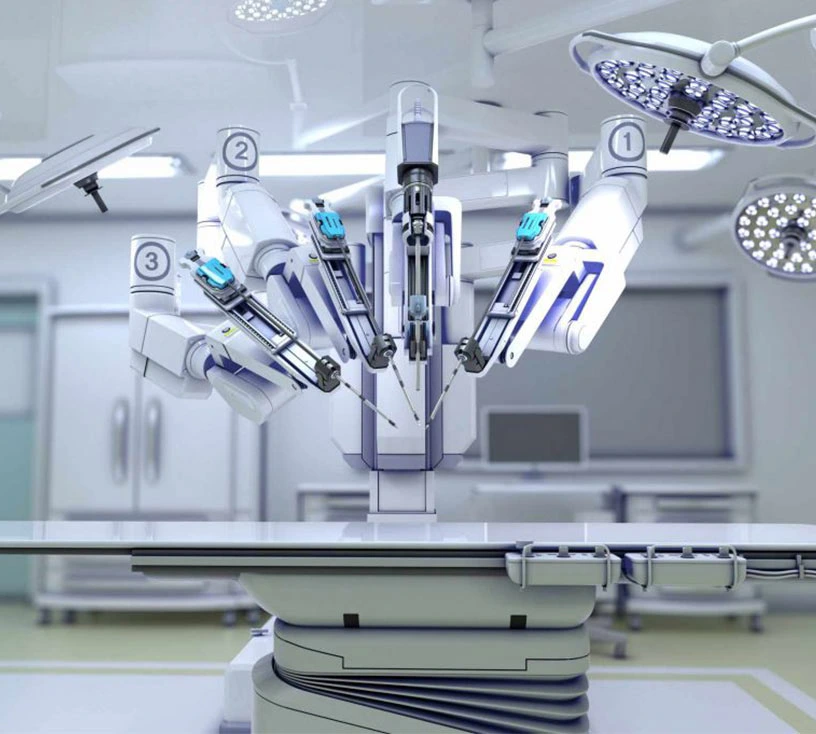
Yes. Integrating augmented reality with robotic surgery platforms is an open line of development in surgical oncology. The robot's 3D view and the information overlaid by the augmented reality system complement each other to give greater precision in resections in anatomical areas that are hard to reach.

What is intraoperative navigation?

Intraoperative navigation is the use of real-time imaging systems to guide the surgeon during the operation. In oncology, it allows the resection to be guided by the exact position of the tumour and the vascular structures, reducing the margin of error in technically highly complex procedures.

Can all patients benefit from surgery with augmented reality?

Augmented reality is most useful in cases of high anatomical complexity, tumours close to major vessels, segmental liver resections and retroperitoneal sarcoma surgery. Our team decides in each case whether using this technology offers a relevant clinical benefit.

What research is being done on augmented reality applied to oncology?

Active lines include developing patient-specific 3D models, integrating intraoperative fluorescence with augmented reality, training residents with virtual platforms and publishing clinical results in international oncology journals. This work aims to standardise the use of the technology in surgical oncology.

Is augmented reality an experimental technology or is it already available clinically?

It is already used in clinical practice at some centres. Our team uses it in real surgery and in training, and takes part in international congresses and publications to move towards its standardisation. It is not experimental in the strict sense, but its use is not yet standardised.

Need to speak with a specialist?

Complete the form and schedule your appointment to speak directly with the surgeon.

Request consultation

Message us on WhatsApp