
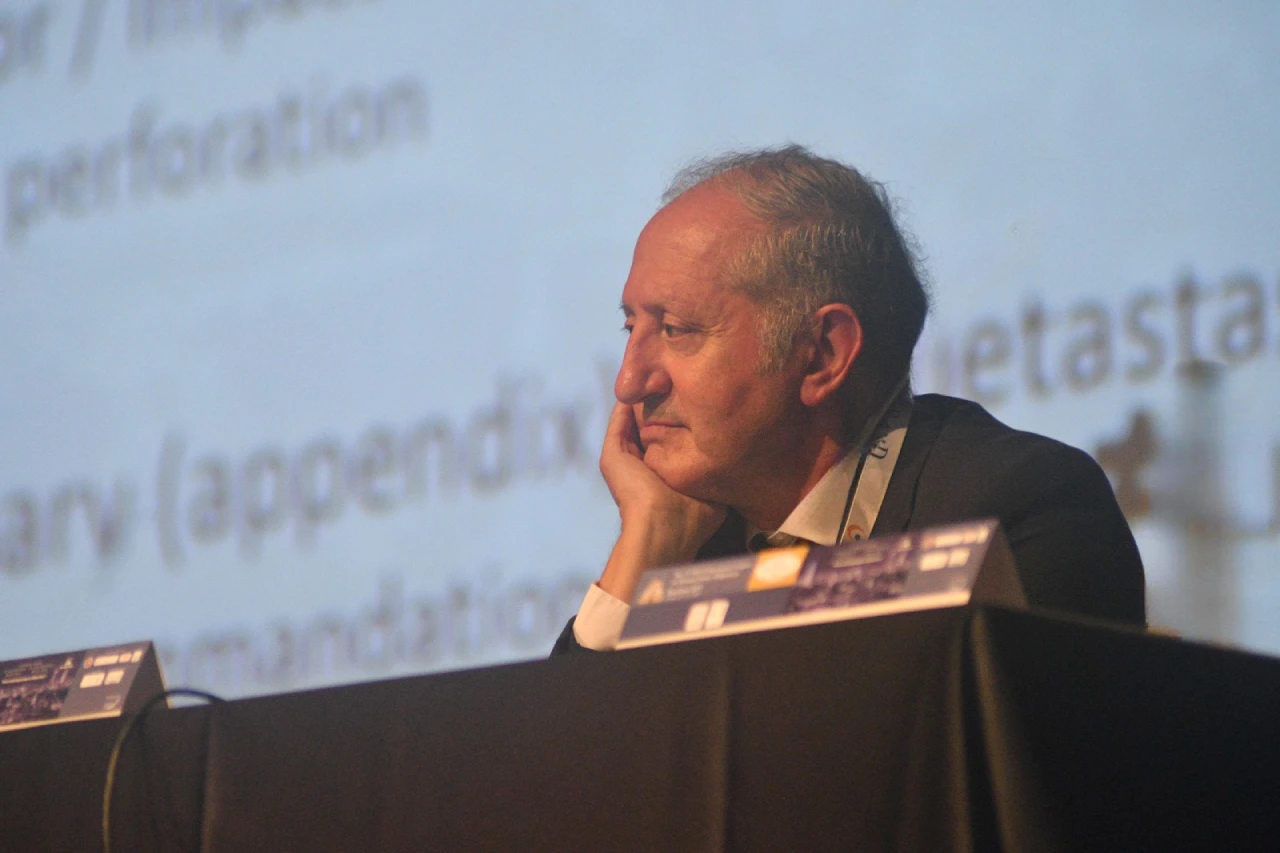
A leading figure in advanced oncological surgery
During the recent congress of the Spanish Society of Surgical Oncology (SEOQ), we had the opportunity to interview Prof. Luis González Bayón, one of the most prominent surgeons at Quenet Torrent Institute and an international reference in advanced surgical techniques for the treatment of cancer.
With an extensive professional career in oncological surgery and specialisation in complex procedures such as HIPEC, PIPAC and robotic surgery, Dr. González has taken an active part in numerous research projects that have contributed significantly to improving outcomes in patients with advanced cancer and peritoneal carcinomatosis.
In this exclusive interview, the doctor shares his reflections on the most recent advances presented at the congress, the technological innovations that are transforming surgical oncology practice and his vision of the future of cancer treatment in the coming years.
Main advances presented at the SEOQ congress
What were the main topics and advances presented at this SEOQ congress?
This year the SEOQ congress focused especially on technological innovation applied to oncological surgery. There were very interesting presentations on the use of artificial intelligence for preoperative surgical planning, new approaches in minimally invasive surgery using state-of-the-art robotic platforms, and significant advances in intraperitoneal perfusion techniques for the treatment of carcinomatosis.
One of the highlights was the presentation of new intraperitoneal chemotherapy protocols that are showing very promising results in terms of overall survival and patients' quality of life. The latest updates to international clinical guidelines for the multimodal management of complex tumours and personalised treatment strategies were also discussed at length.
The multidisciplinary approach was a recurring and fundamental theme throughout the congress, highlighting the crucial importance of close collaboration between surgical oncologists, medical oncologists, interventional radiologists, pathologists and palliative care specialists to achieve the best possible results in each individual case.
The importance of HIPEC and perfusion techniques
What role does the HIPEC technique play in current cancer treatment?
Hyperthermic intraperitoneal chemotherapy (HIPEC) has completely revolutionised the treatment of peritoneal carcinomatosis over the last two decades. What used to be considered a terminal condition with very few treatment options can now be treated with curative intent in many appropriately selected cases.
At Quenet Torrent Institute we have extensive experience and excellent results with this technique. The procedure combines complete cytoreductive surgery, in which all macroscopically visible tumour is removed, followed by the administration of heated chemotherapy directly into the abdominal cavity during the same operation.
This combination makes it possible to achieve very high concentrations of the chemotherapy drug directly where the residual microscopic tumour cells are, while systemic exposure and side effects are considerably minimised. Heat also enhances the cytotoxic effect of the chemotherapy drug and improves its penetration into the tissues.
The most recent studies presented at the congress confirm that, when it is performed at specialised centres with a high volume of cases and by experienced teams, HIPEC can offer long-term survival to patients who previously had practically no chance of cure.
Robotic surgery: precision and better results
How is robotic surgery evolving in oncology?
Robotic surgery has grown exponentially over the last five years and is radically changing the way we approach many types of complex tumours. The new robotic platforms offer millimetre-level surgical precision, high-definition three-dimensional visualisation and superior ergonomics for the surgeon.
At our institute we use state-of-the-art robotic systems to perform complex oncological resections in anatomical areas that are difficult to access, such as the deep pelvis, the retroperitoneum or regions close to major blood vessels. Robotic technology allows us to make movements with a range and precision that would be impossible with conventional laparoscopic surgery.
The benefits for the patient are many and well documented: less intraoperative bleeding, faster postoperative recovery, shorter hospital stays, less postoperative pain, an earlier return to everyday activities and, most importantly, oncological results equivalent or superior to traditional open surgery in most cases.
During the congress several multicentre studies were presented showing that robotic surgery can significantly reduce postoperative complications and improve patients' quality of life without in any way compromising oncological resection margins or long-term results.
Multidisciplinary work: the key to success
How is the multidisciplinary approach integrated into cancer treatment today?
Multidisciplinary teamwork is no longer an option but an absolute necessity in modern oncology. Every cancer case is unique and complex, and requires the coordinated input of multiple specialists to design the best personalised treatment strategy.
At Quenet Torrent Institute we hold weekly multidisciplinary oncology committees attended by surgeons, medical oncologists, radiation oncologists, radiologists, pathologists, nuclear medicine specialists, oncology dietitians and psycho-oncologists. Each professional contributes their specialised view and experience, and together we design a comprehensive, personalised treatment plan.
This collaborative approach allows us to identify which patients will benefit from neoadjuvant treatment before surgery, determine the optimal time for the operation, plan the most appropriate surgical technique, establish the adjuvant chemotherapy protocol if needed and define long-term follow-up.
The scientific evidence is compelling: patients treated by multidisciplinary teams at specialised high-volume centres have better survival, lower complication rates and better quality of life than those treated in isolation.
Research and the future of surgical oncology
What is your vision of the future of oncological surgery?
The future of oncological surgery is extraordinarily promising and exciting. We are in the era of personalised and precision medicine, where we can increasingly adapt treatments to the specific molecular characteristics of each tumour and each patient.
Artificial intelligence is already beginning to play a fundamental role in preoperative surgical planning, helping us predict which patients are most likely to benefit from each type of operation and what the specific risks are in each case. Machine learning algorithms can analyse thousands of similar cases and provide recommendations based on high-quality real-world evidence.
Molecular imaging techniques and intraoperative fluorescence allow us to see in real time during surgery exactly where the tumour cells are, which radically improves our ability to perform complete resections while minimising damage to the surrounding healthy tissue as far as possible.
We are also seeing incredible advances in perioperative immunotherapy, targeted therapies and combined treatments that can turn initially unresectable tumours into resectable ones, greatly increasing the number of patients who can benefit from surgery with curative intent.
Final message: hope and commitment
What message would you like to convey to patients and their families?
I want to convey a message of well-founded hope and optimism. The advances in oncological surgery in recent years have been extraordinary, and we have more and more effective therapeutic tools to offer our patients.
It is essential that patients with complex diagnoses seek a second opinion at specialised centres such as ours, where we have access to all the most advanced technologies and treatments, a highly experienced multidisciplinary team, and where we take an active part in cutting-edge clinical research.
At Quenet Torrent Institute we are committed to excellence in cancer care, constant innovation and a human, close relationship with every patient. Our goal is not only to prolong life, but to do so while maintaining the best possible quality of life during and after treatment.
If you would like more information about our treatments or want a second medical opinion, contact us.