
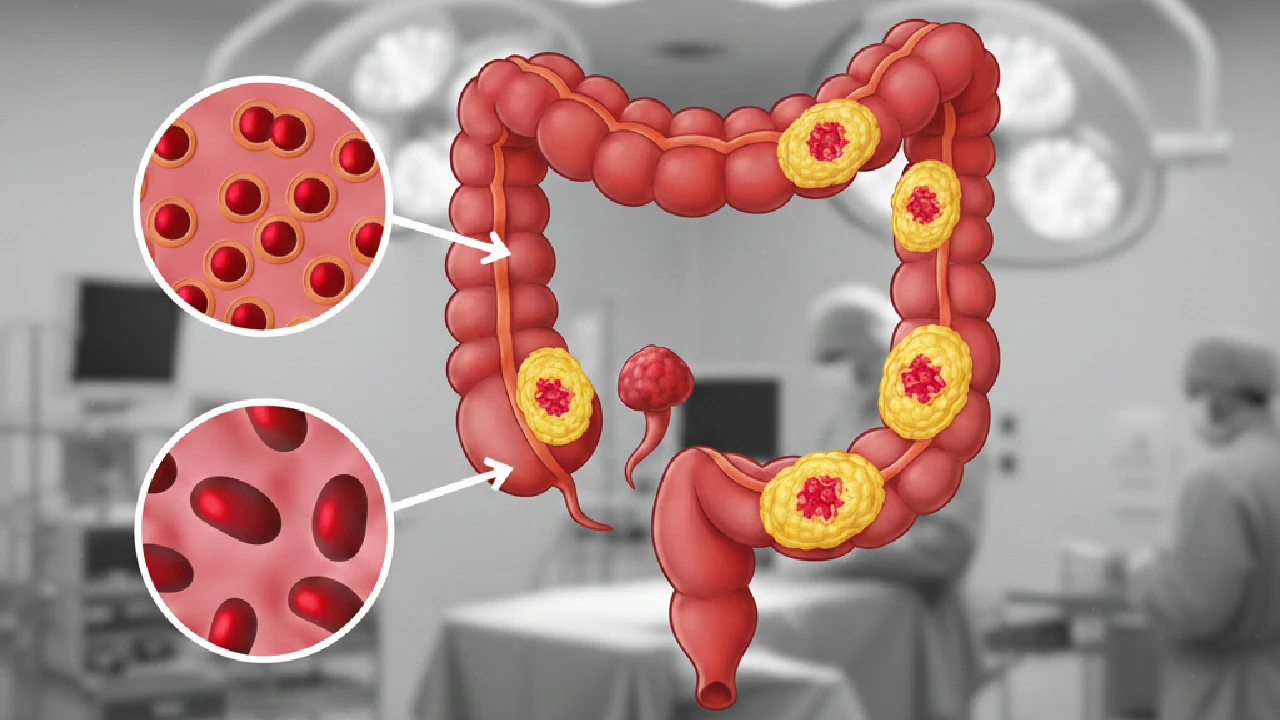
What Is Colon Cancer?
Colon cancer is a malignant tumour originating in the large intestine (colon) or rectum. It is the third most common cancer in Spain, with over 40,000 new cases annually. Most colon cancers develop from benign adenomatous polyps that can become malignant over 10–15 years, allowing for early detection through screening.
Risk Factors
Age: Risk increases after age 50. Family history: Having first-degree relatives with colorectal cancer doubles the risk. Genetic syndromes: Familial adenomatous polyposis (FAP) and Lynch syndrome. Inflammatory bowel disease: Long-standing ulcerative colitis or Crohn's disease. Lifestyle: Diet high in red and processed meat, obesity, sedentary behaviour, smoking and alcohol.
Warning Symptoms
Change in bowel habits: Persistent diarrhoea or constipation. Blood in stool: Visible (rectal bleeding) or occult (detectable only in testing). Chronic abdominal pain or frequent cramping. Feeling of incomplete evacuation. Unexplained weight loss and fatigue. Iron-deficiency anaemia without apparent cause.
Diagnosis
Colonoscopy: The gold standard. Allows visualisation of the entire colon, biopsy and polyp removal. Performed under sedation, painless. CT thoracoabdominal scan: For staging and assessing disease extent. CEA (carcinoembryonic antigen): Tumour marker useful for monitoring. Rectal MRI: For rectal tumours, to assess local invasion and plan treatment.
Treatment
Surgery: The primary treatment. At Quenet Torrent Institute we perform colectomies using robotic and laparoscopic surgery, with faster recovery and fewer complications. Types of surgery depending on location: right hemicolectomy, left hemicolectomy, sigmoidectomy, anterior resection of rectum, abdominoperineal resection.
Adjuvant chemotherapy: After surgery in stage III and some high-risk stage II cases. FOLFOX or CAPOX regimens for 6 months. Radiotherapy: Mainly for rectal cancer, before (neoadjuvant) or after surgery. Targeted therapies: Bevacizumab, cetuximab, panitumumab in metastatic disease.
Prevention and Screening
Population screening: Faecal occult blood test every 2 years from age 50. If positive, colonoscopy. Preventive colonoscopy: From age 45–50, or earlier with family history. Healthy lifestyle: High-fibre diet, fruits and vegetables, regular exercise, avoiding obesity, tobacco and alcohol.
Suspected colon cancer? Early detection is key. At Quenet Torrent Institute we offer rapid diagnosis and advanced surgical treatment with robotic surgery. Request an appointment with our specialists.