
ERAS consensus in primary retroperitoneal sarcoma surgery
First multidisciplinary perioperative care guidelines for retroperitoneal sarcoma, based on Delphi methodology
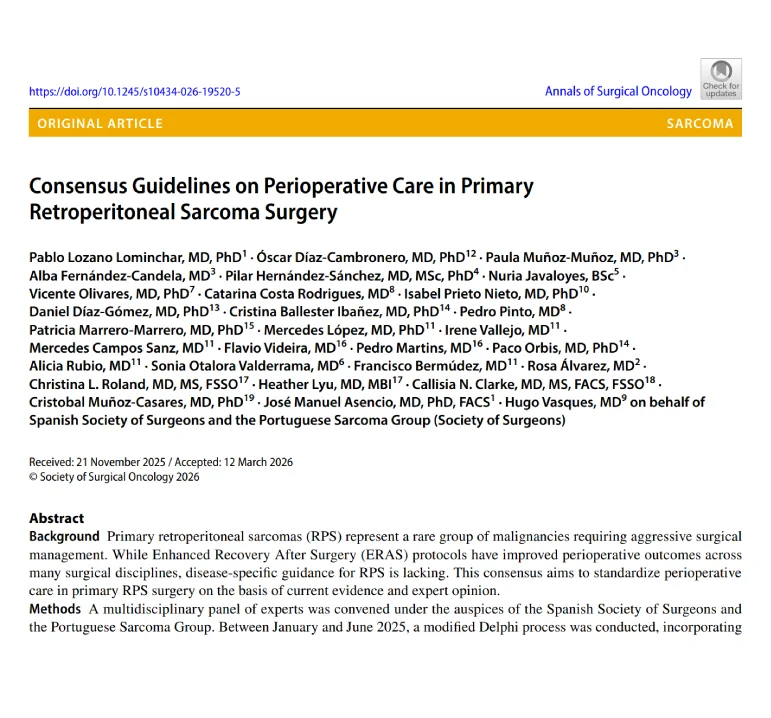
Why was an ERAS consensus needed in retroperitoneal sarcoma?
Primary retroperitoneal sarcomas (RPS) account for approximately 15% of all soft tissue sarcomas and are among the most technically demanding tumors to operate on. More than 70% of patients require resection of adjacent organs, with prolonged operative times and a major complication rate exceeding 16%, primarily due to hemorrhage and anastomotic failure.
Although ERAS (Enhanced Recovery After Surgery) protocols have shown clear improvements in colorectal, gynecologic, and urologic surgery, no RPS-specific guideline had been published until now. This consensus is the first at an international level and was developed with Delphi methodology.
How the consensus was built
A multidisciplinary panel of 26 professionals (surgical oncologists, anesthesiologists, medical oncologists, internists, nutritionists, psycho-oncologists, and perioperative care specialists) worked between January and June 2025 under the auspices of the Spanish Society of Surgeons and the Portuguese Sarcoma Group.
The process followed a modified Delphi over four rounds, including systematic literature review, subgroup synthesis (preoperative, intraoperative, postoperative), and structured voting. Each recommendation was graded using the GRADE framework; consensus was defined as ≥80% agreement, and strong consensus as ≥90%.
The final round was held during the IV Spanish-Portuguese Meeting on the Treatment of Sarcomas, with anonymous electronic voting among clinicians outside the drafting panel, strengthening external validity and minimizing author bias.
Results: 42 recommendations, 33 with consensus
Of the 42 recommendations proposed across the three perioperative phases:
- 16 reached strong consensus (>90% agreement)
- 17 reached weak consensus (80–90% agreement)
- 9 did not meet the predefined threshold
Most recommendations are supported by indirect evidence from major abdominal oncologic surgery, given the rarity of retroperitoneal sarcoma and the absence of specific randomized trials.
Main recommendations by perioperative phase
1 · Preoperative
- Psycho-oncological support, early, personalized and standardized.
- Smoking cessation 4–8 weeks before surgery (counseling, pharmacotherapy, and behavioral support).
- Alcohol abstinence for 4 preoperative weeks.
- Anemia screening and correction with iron, folic acid, and/or vitamin B12.
- Prehabilitation combining physical exercise, nutritional support, and psychological counseling (strong consensus, GRADE high).
- Nutritional screening and high-protein intake strategy (>1–1.5 g/kg/day); immunonutrition in selected cases.
- Multidisciplinary pre-anesthetic evaluation with frailty scales and screening of modifiable risk factors.
- Short fasting (clear fluids up to 2h, solids up to 6h) and oral carbohydrate loading the evening before and 2–3h prior.
- Multimodal PONV prophylaxis (postoperative nausea and vomiting) in high-risk patients.
- Mechanical bowel preparation + oral antibiotics when colectomy is planned.
2 · Intraoperative
- Antibiotic prophylaxis (cefazolin) 60 minutes before incision, redosed if surgery exceeds two antibiotic half-lives or blood loss surpasses 1,500 ml. Alcohol-based antiseptics for skin preparation.
- Thoracic epidural analgesia (>72h) combining low-dose local anesthetics with opioids.
- Multimodal analgesia with adjuvants (dexmedetomidine, lidocaine, ketamine, magnesium sulfate).
- Lung-protective ventilation: low tidal volumes (6–8 ml/kg), individualized PEEP, and recruitment maneuvers.
- Quantitative neuromuscular monitoring with appropriate pharmacologic reversal.
- Goal-directed fluid therapy (GDT) using balanced crystalloids.
- Tranexamic acid, fibrinogen correction if <2 g/L, and maintenance of active normothermia.
- Restrictive transfusion threshold (Hb > 7 g/dL) in hemodynamically stable patients.
- Selective abdominal drains only, not routine; early removal when used.
3 · Postoperative
- Early extubation as soon as hemodynamic and metabolic stability is achieved.
- Early removal of nasogastric tube and urinary catheter.
- Ileus prevention: early oral feeding, gum chewing, prokinetics.
- Continued thoracic epidural analgesia to reduce opioids, pain, and facilitate mobilization.
- Ongoing nutritional support with daily protein target.
- Thromboembolic prophylaxis with LMWH and intermittent pneumatic compression.
- Early mobilization within 24h postoperatively.
"These are the first consensus-based, multidisciplinary perioperative care guidelines tailored to primary retroperitoneal sarcoma surgery. They aim to harmonize clinical practice, reduce variation, and improve surgical and recovery outcomes in high-risk patients."
Consensus conclusion, Annals of Surgical Oncology · 2026
What does it mean for patients?
Until now, each center applied different protocols when preparing and recovering a retroperitoneal sarcoma patient. This consensus standardizes practice on both sides of surgery with interventions that have been shown to reduce postoperative ileus, readmission rates, and length of stay, without increasing complications.
For the patient, this means arriving at the operating room better prepared, experiencing surgery with less pain and fewer pulmonary complications, and returning home sooner. Prehabilitation (exercise, nutrition and psychological support in the weeks prior) reached strong consensus with a high GRADE level of evidence.
The authors underscore that these recommendations should be prospectively validated and encourage international collaboration to refine and implement them across all retroperitoneal sarcoma reference centers.
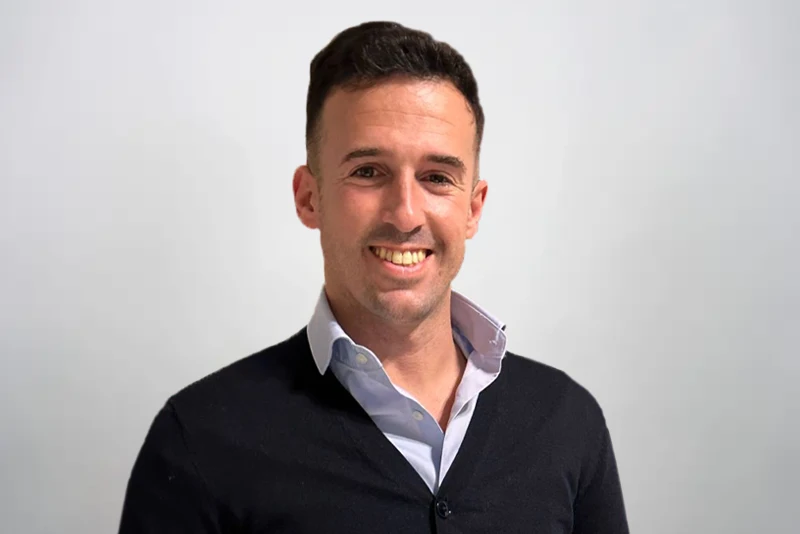
Dr. Pablo Lozano Lominchar, first author of the consensus
Dr. Pablo Lozano Lominchar, surgical oncologist at Hospital General Universitario Gregorio Marañón and member of the Quenet Torrent Institute team, signs as first author of this international consensus. His work focuses on retroperitoneal sarcomas, complex soft tissue tumors, and high-complexity oncologic surgery.
The consensus, coordinated alongside Dr. José Manuel Asencio (Gregorio Marañón) and Dr. Hugo Vasques (Instituto Português de Oncologia, Lisbon), also had the collaboration of international centers such as MD Anderson Cancer Center (Houston) and the Medical College of Wisconsin.
Participating societies and centers
Scientific societies: Spanish Society of Surgeons · Portuguese Sarcoma Group · Society of Surgical Oncology (SSO).
Spanish centers: Hospital Gregorio Marañón (Madrid), Hospital Universitario La Paz (Madrid), Hospital Quironsalud Torrevieja (Alicante), Hospital La Fe (Valencia), Hospital Virgen del Rocío (Sevilla), Hospital Virgen de La Arrixaca (Murcia), Hospital Universitario de Canarias, Hospital San Juan de Dios (Córdoba).
International centers: IPO Lisbon and IPO Porto (Portugal), MD Anderson Cancer Center (Houston, USA), Medical College of Wisconsin (USA).