
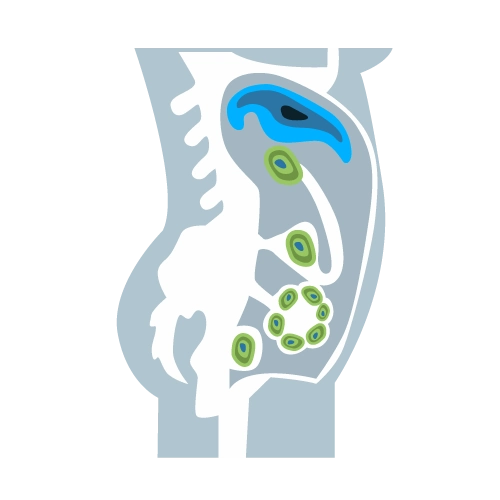
What Is Pseudomyxoma Peritonei?
Pseudomyxoma peritonei (PMP) is a rare clinical condition characterised by the accumulation of mucinous tumour implants throughout the peritoneal cavity, most commonly originating from a ruptured mucinous appendiceal tumour (low-grade appendiceal mucinous neoplasm, LAMN). Less commonly it arises from the ovary, colon or other organs. The peritoneum fills with gelatinous mucin and tumour deposits — the "jelly belly" phenomenon.
Why Two-Stage Surgery?
In extensive pseudomyxoma peritonei, complete cytoreduction in a single operation may not be feasible due to: disease extent throughout the peritoneal cavity requiring multiple bowel resections, risk of leaving the patient with insufficient bowel length (short bowel syndrome), or need to reassess residual disease after initial surgery.
The two-stage approach involves a first operation targeting the most burdensome disease areas and creating an ostomy, followed several months later by a second definitive cytoreductive surgery after patient recovery, restoration of nutritional status and re-staging.
The Two-Stage Procedure
Stage 1: Debulking of dominant disease, appendectomy (if not previously performed), diverting ostomy creation, peritoneal biopsy for pathological classification. Interval: Recovery, nutritional rehabilitation, restaging imaging (CT), optimisation. Duration: typically 3–6 months. Stage 2: Definitive CRS aiming for complete cytoreduction (CC-0), HIPEC administration, bowel reconstruction and ostomy reversal where feasible.
Outcomes
At expert centres, complete cytoreduction is achieved in 80–90% of low-grade PMP cases. 5-year survival exceeds 70% for low-grade appendiceal mucinous tumours after R0 resection. High-grade appendiceal carcinomas have less favourable outcomes. Long-term follow-up is essential as late recurrences can occur.
Have you been diagnosed with pseudomyxoma peritonei? At Quenet Torrent Institute we are specialists in peritoneal surface surgery including complex PMP cases. Request a consultation.