
Ovarian cancer is the gynaecological tumour most difficult to detect early. It is often called "the silent cancer" because its early symptoms are subtle, non-specific and easy to confuse with digestive or menstrual discomfort. This is precisely why, in more than 70% of cases, it is diagnosed at advanced stages.
Recognising the symptoms of ovarian cancer early improves the prognosis. In this guide, prepared by the surgical oncology team at Quenet-Torrent Institute, we explain what signals to watch for, when to consult a specialist and why an early diagnosis changes the treatment options.
What is ovarian cancer?
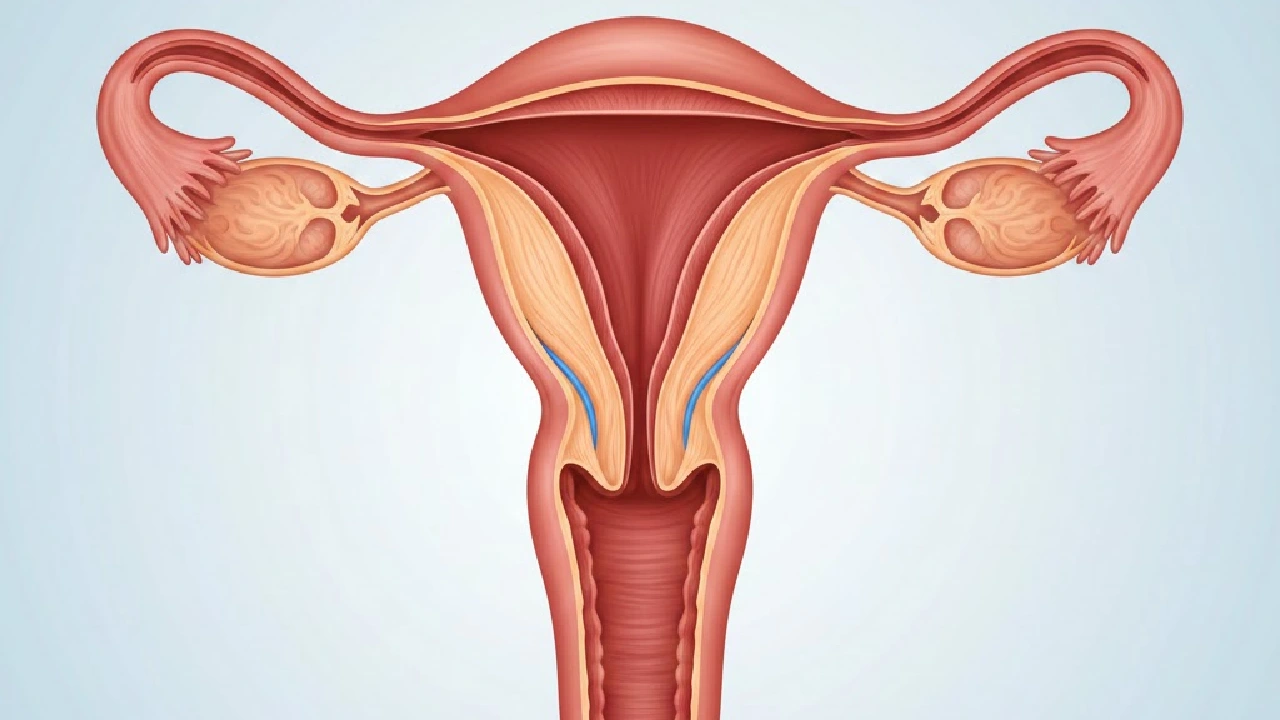
Ovarian cancer is a malignant tumour that originates in the ovaries, the female reproductive glands located on either side of the uterus. Although different histological types exist, the most frequent is epithelial ovarian carcinoma, which represents approximately 90% of cases.
Its behaviour is particular: it frequently spreads through the abdominal cavity before producing clear symptoms, affecting the peritoneum and other neighbouring organs. This spread, known as peritoneal carcinomatosis, is what makes its surgery so complex, and the reason why it is best treated by specialised teams.
Why ovarian cancer is so difficult to detect
Unlike breast cancer or cervical cancer, there is currently no effective screening test for ovarian cancer in asymptomatic women without elevated risk. Nor is there a universal early detection programme.
Three additional factors explain the diagnostic delay:
• Early symptoms are non-specific and overlap with those of irritable bowel syndrome, indigestion or hormonal disorders.
• The ovaries are located in an area of the pelvis where a tumour can grow without producing evident pain for months.
• The disease progresses rapidly from localised stages to peritoneal dissemination.
That is why it helps to recognise signals that may seem minor but can be early signs of the disease.
Early symptoms of ovarian cancer
Initial symptoms usually appear persistently and worsen over the weeks. What matters is not each isolated symptom, but their combination, frequency and persistence over more than two or three weeks.
1. Persistent abdominal bloating
A feeling of distension or "bloated belly" that does not disappear after menstruation or with dietary changes. It is one of the most frequent and most ignored symptoms.
2. Pelvic pain or pressure
Discomfort in the lower abdomen or pelvis, similar to menstrual pain but persisting outside the cycle or in postmenopausal women.
3. Early satiety
Feeling full after only a few spoonfuls of food, or loss of appetite without an apparent cause. It is often accompanied by mild nausea.
4. Urinary changes
Frequent and urgent need to urinate, without a diagnosed urinary tract infection.
5. Changes in bowel habits
Recent-onset constipation, diarrhoea or changes in the usual rhythm without a clear dietary cause.
6. Unexplained fatigue
Continuous fatigue, unrelated to physical effort, that does not improve with rest.
Warning sign: if you experience several of these symptoms persistently for more than two weeks, especially if you are over 50 or have a family history, consult a specialist in gynaecological oncology as soon as possible.
Symptoms in advanced stages
When the tumour progresses or spreads beyond the ovary, symptoms become more evident:
• Ascites: accumulation of fluid in the abdomen producing noticeable bloating and a feeling of heaviness.
• Involuntary weight loss together with loss of appetite.
• More intense and constant abdominal pain.
• Abnormal vaginal bleeding, especially in postmenopausal women.
• Dyspnoea or breathing difficulty if pleural effusion is present.
• Palpable lumps in the abdominal or pelvic area.
At this stage, the therapeutic approach requires expertise in highly complex oncological surgery, since the goal is complete cytoreduction of the tumour combined, in many cases, with intraperitoneal chemotherapy and, afterwards, intravenous treatment with chemotherapy or other targeted therapies.
Do these symptoms mean I have ovarian cancer?
Not necessarily. Most women experiencing these symptoms do not have ovarian cancer. Bloating, pelvic discomfort or digestive changes are symptoms common to many benign conditions: functional cysts, uterine fibroids, endometriosis, irritable bowel syndrome or hormonal changes.
However, what differentiates ovarian cancer symptoms is:
• Their persistence (more than 2-3 weeks in a row).
• Their recent onset without an identifiable cause.
• Their combination (several at once).
• Their progressive worsening.
When this combination is present, it should be assessed by a specialist as soon as possible.
Risk factors for ovarian cancer
Certain factors raise the risk of developing the disease and should intensify clinical surveillance:
• Age over 50 and postmenopause.
• Family history of ovarian, breast, colon or endometrial cancer.
• Hereditary genetic mutations such as BRCA1, BRCA2 or Lynch syndrome.
• Nulliparity (never having given birth) or first pregnancy after age 35.
• Previous endometriosis.
• Prolonged hormone replacement therapy after menopause.
• Obesity and smoking.
If you fall into one or more of these groups, it is advisable to establish personalised gynaecological follow-up and consider genetic testing when indicated.
When to see a specialist in surgical oncology?
There are three situations in which consulting a team specialised in surgical oncology, such as the one at Quenet-Torrent Institute, is justified:
• Clinical or radiological suspicion of an ovarian mass that may be malignant.
• Already confirmed diagnosis of ovarian cancer, especially if there is suspicion of peritoneal carcinomatosis or advanced disease.
• Need for a second opinion on the treatment plan, especially if complex surgery, recurrence or salvage surgery has been proposed.
In ovarian cancer, the quality of the first surgery is one of the factors that most affect prognosis. That is why choosing the surgical team is an important clinical decision.
How ovarian cancer is diagnosed
The diagnostic process combines several tools to confirm suspicion and define the extent of the disease:
• Gynaecological examination.
• Transvaginal ultrasound, the first imaging test in case of suspicion.
• Tumour markers in blood: CA-125, HE4 and ROMA index.
• CT, MRI or PET-CT to assess abdominal and distant extension.
• Biopsy or diagnostic laparoscopy in selected cases, for histological confirmation and assessment of the Peritoneal Cancer Index (PCI).
• Genetic testing (BRCA1/BRCA2) in patients diagnosed or with family history.
All this information is integrated in a multidisciplinary committee that decides the treatment: surgery as the main treatment, neoadjuvant chemotherapy or combined strategies.
The role of surgery in ovarian cancer
Unlike other tumours, in ovarian cancer surgery is the main pillar of treatment, even at advanced stages. The goal is not simply to "remove the ovary": it is to achieve complete cytoreduction, that is, to remove all visible disease in the abdominal cavity.
Overall survival is directly related to the quality of cytoreductive surgery and with the volume of patients each team treats per year. Patients operated on at high-volume centres and by specialised teams have better oncological outcomes and lower postoperative morbidity.
At Quenet-Torrent Institute we treat ovarian cancer with a combination of techniques that may include:
• Complete cytoreductive surgery (CC-0).
• HIPEC (hyperthermic intraperitoneal chemotherapy) in selected cases.
• PIPAC (pressurised intraperitoneal aerosol chemotherapy) in patients with non-resectable carcinomatosis.
• Recurrence or salvage surgery after previous treatment.
• Clinical trials with new intraperitoneal therapies.
If you want to know in detail how we surgically address this pathology, see our page on the surgical treatment of ovarian cancer, where we explain the techniques, indications and results step by step.
Conclusion: watch for symptoms that persist
Ovarian cancer usually causes small, repeated symptoms that are easy to play down. The difference between an early and a late diagnosis often lies in watching for those signs and consulting in time.
If you have symptoms that worry you, a family history or an already confirmed diagnosis, at Quenet-Torrent Institute we can assess your case.
Related treatments at Quenet-Torrent Institute
• Ovarian cancer · Surgical treatment: techniques, indications and results.
• Peritoneal carcinomatosis of ovarian origin: peritoneal dissemination, indications and outcomes.
• HIPEC · Hyperthermic intraperitoneal chemotherapy: what it is and when it is used.
• PIPAC · Pressurised intraperitoneal aerosol chemotherapy: alternative for patients with non-resectable carcinomatosis.
• Cytoreductive surgery in cancer: what it is, when it is used and how it is performed.
• Dr. Juan José Torrent: author of this article, oncological surgeon specialised in gynaecological pathology.
This article is for informational purposes only and does not replace medical consultation. If you have persistent symptoms, consult a specialist for individualised evaluation.